How to Record a Term Deposit
A term deposit is money you place with a bank for a fixed period of time. In return, the bank usually pays you interest.
In this tutorial, we will show you how to record a term deposit in Gimbla, how to move the money into a Term Deposit account, and how to record the payment once the term deposit matures.
🧭 Navigate To
👣 Walkthrough
Example: You will record a term deposit of $5,000 at 3.95% for 11 months. At the end of the term deposit, the bank pays back $5,180.73.
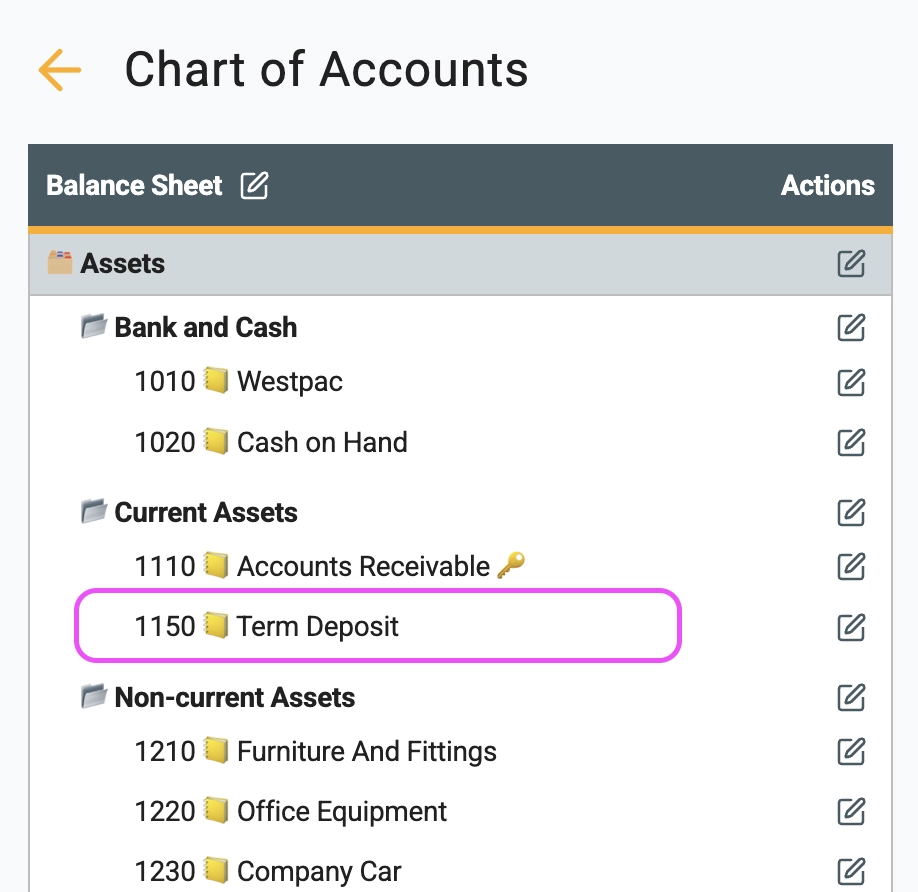
1 Create a new chart of account under
Current Assets called Term Deposit
.
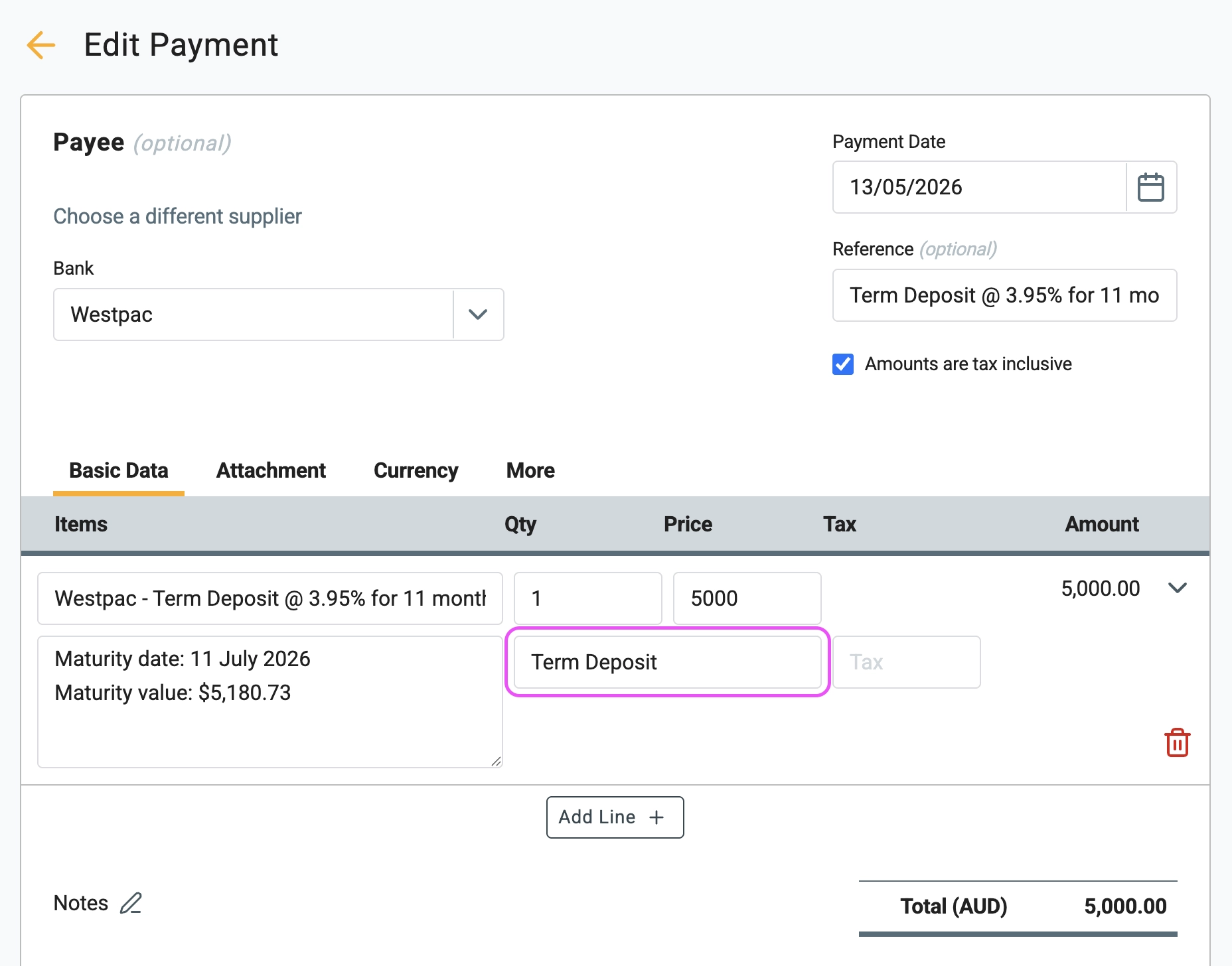
2 Go to your bank transactions and click
Make Payment
. Enter the payment details and select the
Term Deposit account. Leave the tax code blank.
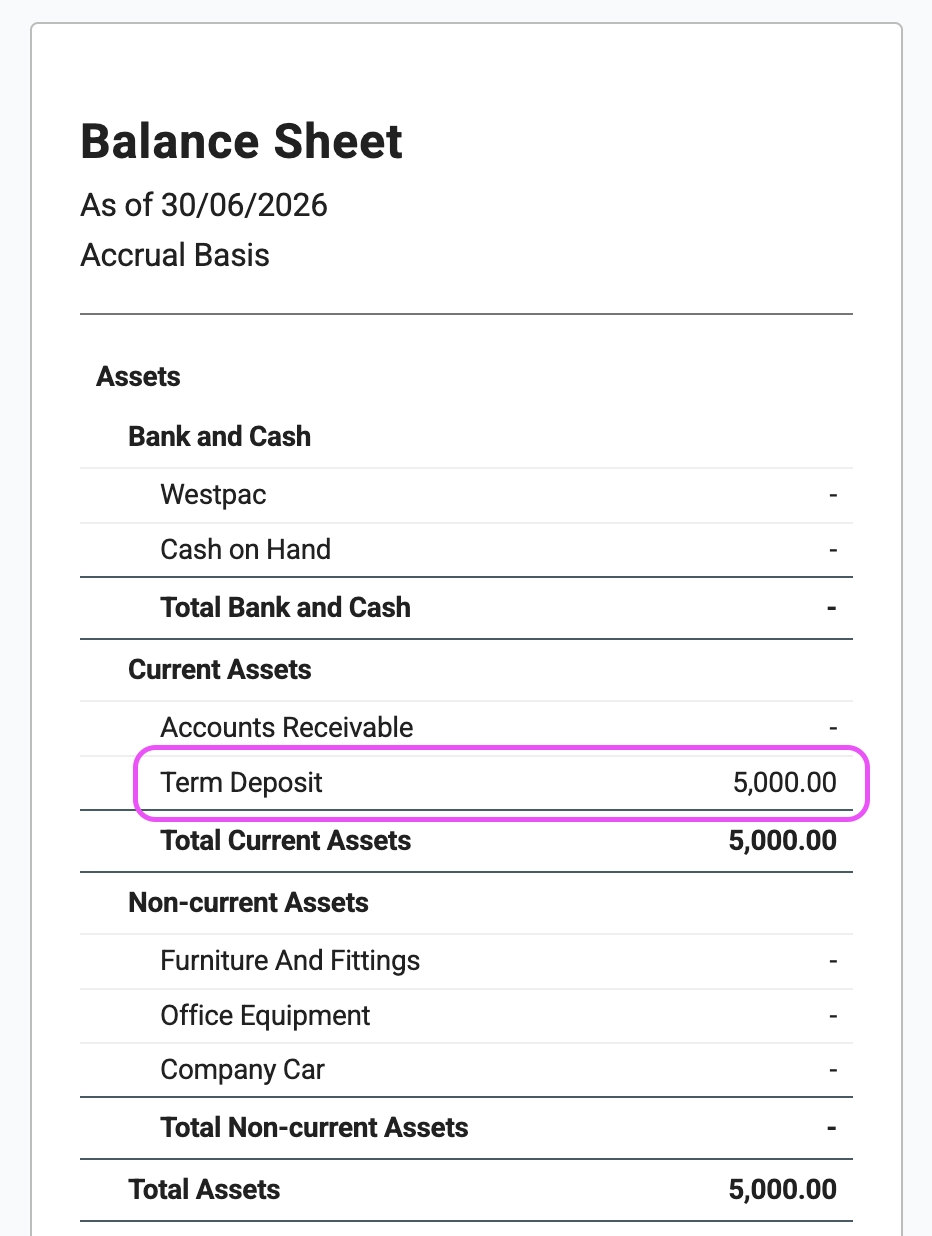
3 If you look at your Balance Sheet report, you will notice that the $5,000 has moved from your bank account to the Term Deposit account.
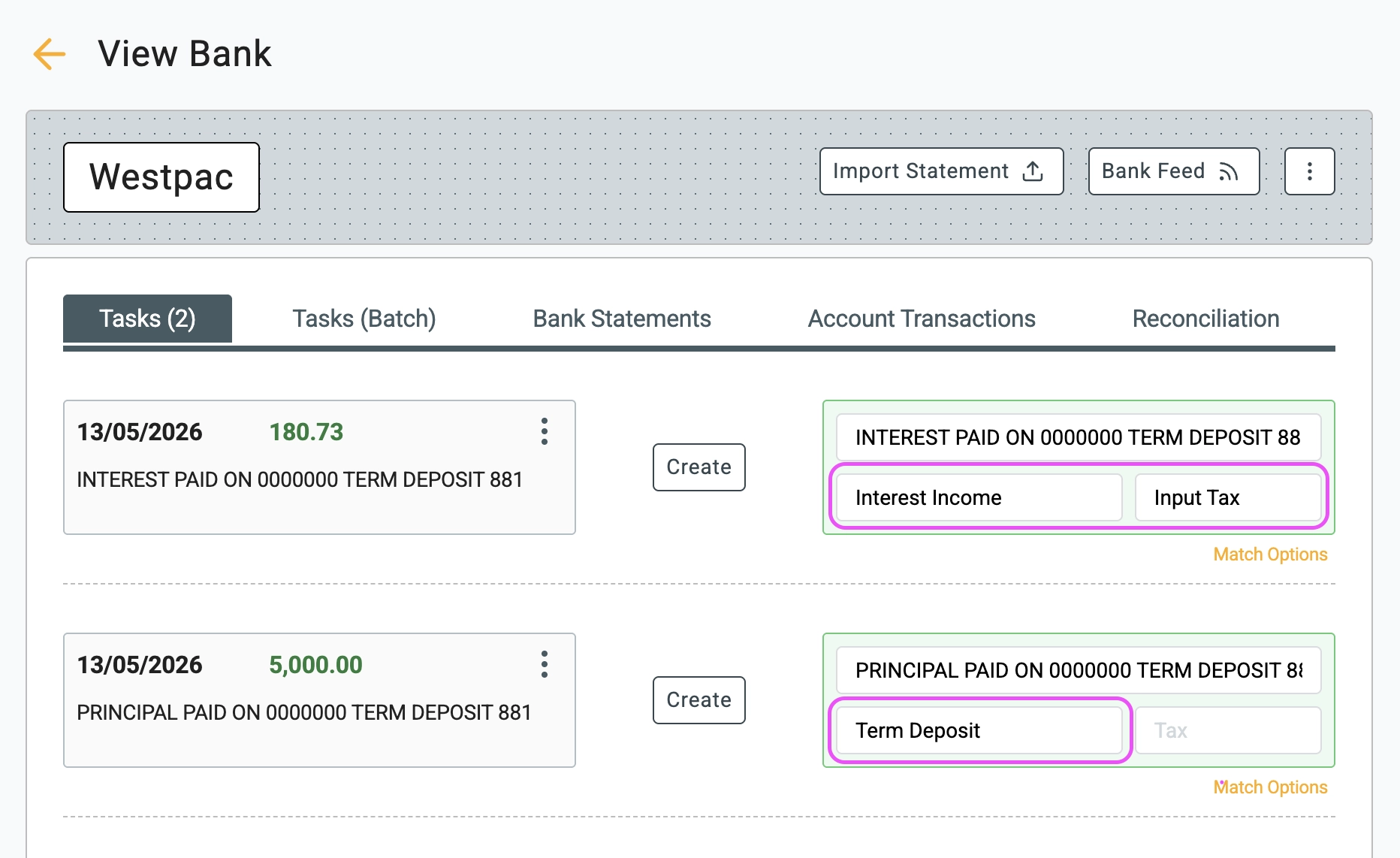
4 After the term deposit matures, the bank will usually send you two payments. One is the original deposit, and the other is the interest earned.
- Line 1 — Original Value ($5,000.00)
Code this to your Term Deposit account. - Line 2 — Interest Value ($180.73)
Code this to your Interest Income account.
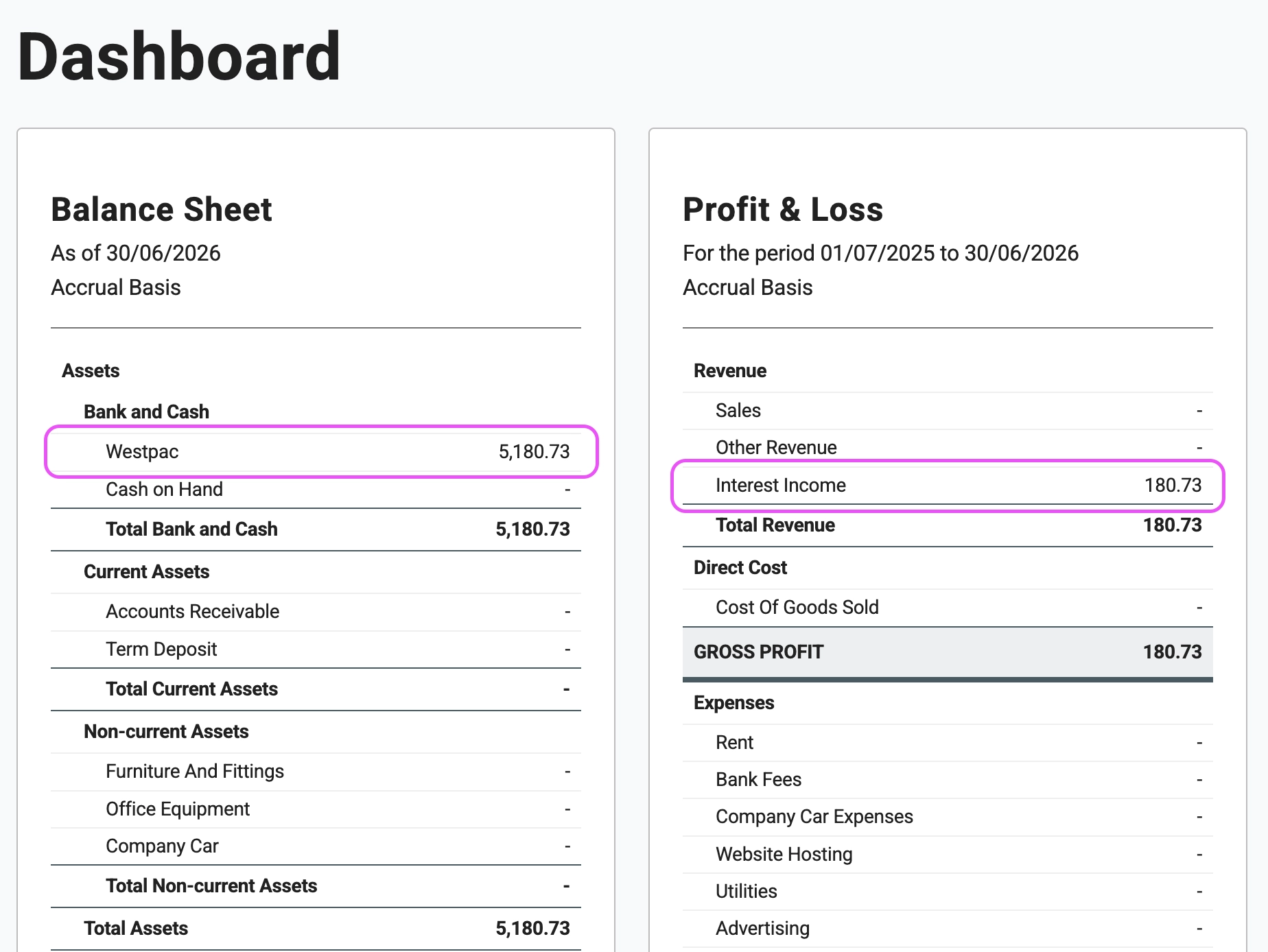
5 If you look at both the Balance Sheet and Profit and Loss, you can now see the final result clearly. Your Westpac bank account shows $5,180.73, and $180.73 is reported as Interest Income.
🖇️ Plain English Guide to Term Deposits
Term deposits can look a little confusing in accounting because the money leaves your bank account, but it is not really an expense. You still own the money. It has just moved to another type of asset.
- Is a term deposit an expense?
No. The original amount is not an expense. It is just money moved from your normal bank account to a Term Deposit account. - Where does the original deposit go?
The original deposit should go to a Balance Sheet account, usually under Current Assets. This lets you track the money separately while it is locked away with the bank. - Where does the interest go?
The interest is income. When the bank pays you interest, code that amount to an Interest Income account so it appears in your Profit and Loss. - Why leave the tax code blank?
The original deposit is just a transfer between asset accounts, so it normally does not need a tax code. - What if the bank pays one combined amount?
Split the transaction into two lines. One line is for the original deposit, and the other line is for the interest earned. - Simple way to remember it
Original money = Balance Sheet. Interest earned = Profit and Loss.