- Overview
- Quick Answer
- Key Points
- What a Financial Audit Actually Checks
- When Your Business May Need an Audit
- Start With the Audit Scope and Timeline
- Build an Audit-Ready Evidence File
- Reconcile First, Then Explain
- Prepare Working Papers Auditors Can Follow
- Common Audit Issues to Fix Early
- A One-Month Audit Preparation Checklist
- How Gimbla Helps Keep Audit Evidence Tidy
- Frequently Asked Questions
- Final Thought
Your Guide to a Successful Financial Audit
Published May 19th, 2026 | Updated May 23rd, 2026 | Team Gimbla
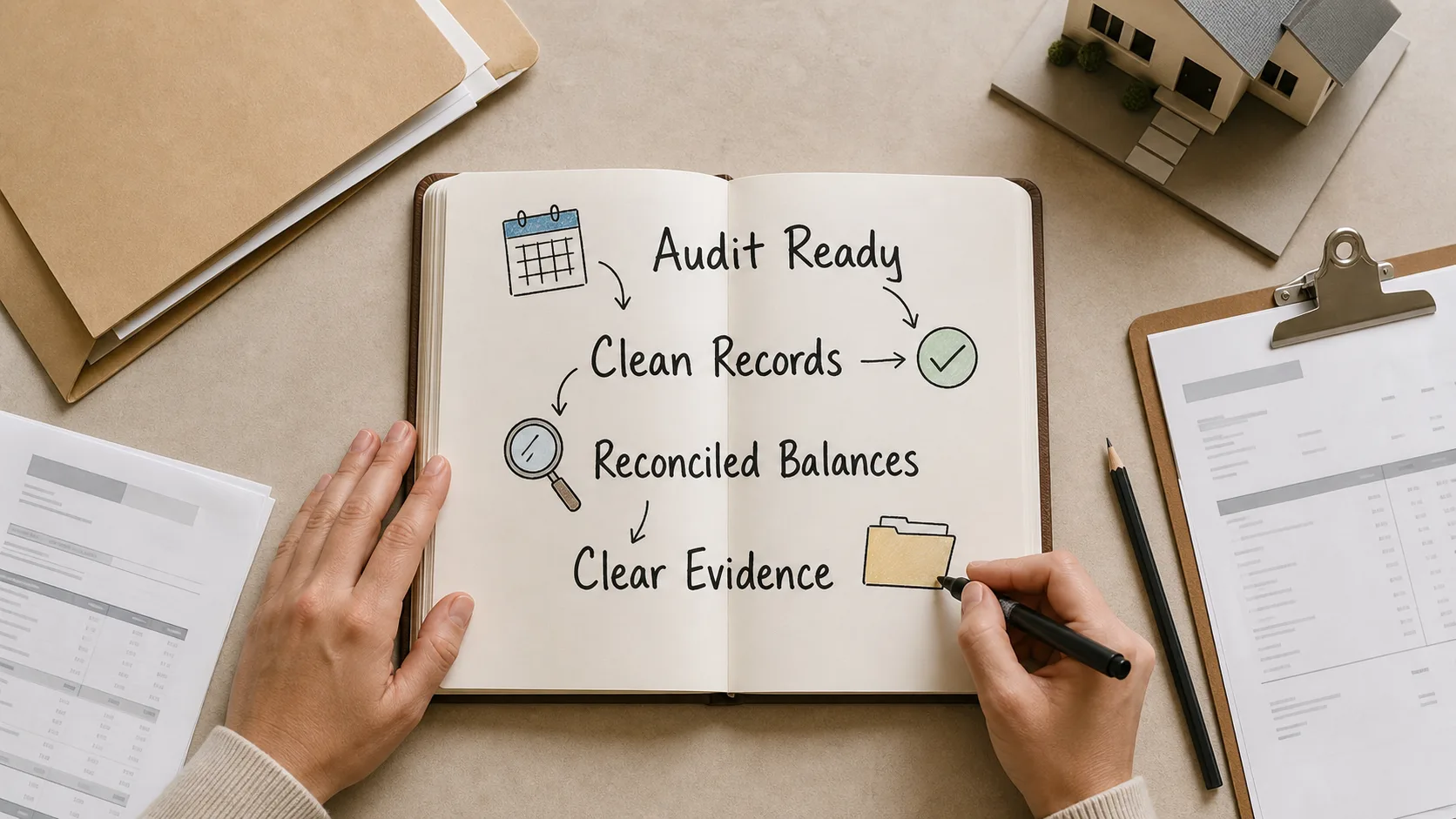
A successful financial audit is prepared before the auditor arrives. The goal is not to make the numbers look perfect at the last minute. It is to give the auditor clean financial statements, reconciled balances, clear supporting records and prompt answers to follow-up questions.
For small businesses, charities and growing companies, audit preparation is mostly good bookkeeping under pressure. If invoices, bills, payroll, bank reconciliations, GST records and management reports are already tidy, the audit becomes a structured review instead of a stressful document hunt.
Audit readiness is simple in principle: reconcile the accounts, support the balances and make it easy for someone independent to follow the trail.
Quick Answer
A financial audit is an independent check of whether the financial report is free from material misstatement. In Australia, the Australian Auditing Standards are designed to support the auditor in obtaining reasonable assurance, not absolute certainty. That means the auditor looks for enough appropriate evidence to form an opinion on the financial report as a whole.
To prepare well, confirm the audit scope early, close the accounting period, reconcile every major account, prepare schedules for important balances, collect invoices and contracts, and respond quickly to audit queries. The cleaner your records are before fieldwork starts, the less disruptive the audit usually feels.
Key Points
- A good audit starts with reconciled bank, customer, supplier, payroll, tax and balance sheet accounts.
- Auditors need evidence, not explanations alone. Keep source documents close to the transaction record.
- Agree the timetable, contact person and audit request list before fieldwork begins.
- Fix known bookkeeping issues early, especially old unreconciled items, unsupported journals and stale debtor balances.
- Use accounting software to keep the audit trail intact, then lock the period once the final accounts are approved.
What a Financial Audit Actually Checks
A financial audit is not the same as an ATO review, a tax return review or a general health check by your accountant. It is an assurance engagement over a financial report. ASIC explains that an audit provides a high level of assurance to users of financial reports, with the auditor evaluating whether the report is free from material misstatement based on the audit evidence obtained.
In practical terms, the auditor is looking at questions such as:
- Do the financial statements agree with the underlying accounting records?
- Are bank, customer, supplier, payroll, loan and tax balances complete and supportable?
- Is revenue recorded in the correct period?
- Are liabilities, provisions and commitments properly recognised or disclosed?
- Are accounting policies suitable for the business and applied consistently?
- Is there evidence for unusual, large or judgement-heavy transactions?
An audit does not mean every transaction is checked one by one. Auditors plan their work around materiality, risk, controls and audit evidence. That is why clear reconciliations and well-organised supporting documents matter so much.
When Your Business May Need an Audit
Not every small business needs a statutory financial audit. Some audits are required by law, while others are requested by lenders, investors, grant funders, franchisors, boards, members or owners.
For Australian companies, ASIC’s proprietary company guidance says a company is large for financial years commencing on or after 1 July 2019 if it satisfies at least two of these criteria: consolidated revenue of $50 million or more, consolidated gross assets of $25 million or more, or 100 or more employees. Large proprietary companies must prepare and lodge a financial report and directors’ report, and the accounts must be audited unless ASIC grants relief.
For registered charities, the ACNC says the review or audit requirement depends on charity size. Small charities do not have an ACNC requirement to have a financial report reviewed or audited, medium charities must have their financial report reviewed or audited, and large charities must have their financial report audited.
Your business may also need an audit because of:
- a loan covenant or finance agreement
- a shareholder, member or investor request
- a grant acquittal or funding agreement
- a constitution, trust deed or governing document
- industry licensing or regulator requirements
- preparation for sale, merger, due diligence or external investment
If you are unsure whether an audit is required, check the governing document, funding agreement, regulator guidance and advice from your accountant or lawyer before assuming it is optional.
Start With the Audit Scope and Timeline
The audit goes more smoothly when everyone knows what is being audited, which reporting framework applies and who owns each answer.
Before fieldwork starts, confirm:
- Which entity, period and financial statements are in scope.
- Whether the audit is statutory, grant-related, lender-requested or voluntary.
- Which accounting basis and reporting framework apply.
- The key dates for trial balance close, audit fieldwork, draft accounts, board approval and lodgement.
- Who will provide records, answer queries and approve proposed adjustments.
- Whether the auditor needs system access, report exports or a document folder.
Ask the auditor for a prepared-by-client list early. This is the request list of schedules, reports and supporting documents the business needs to provide. Treat it like a project plan rather than an inbox chore.
Build an Audit-Ready Evidence File
An audit file does not need to be fancy. It needs to be complete, easy to search and consistent with the final reports.
| Audit area | Common evidence | Preparation task |
|---|---|---|
| Bank and cash | Bank statements, reconciliation reports, merchant statements, loan account statements | Reconcile every bank, credit card, payment gateway and loan account to period end |
| Revenue and receivables | Customer invoices, contracts, aged receivables, credit notes, receipt records | Review unpaid invoices, deposits, doubtful debts and revenue cut-off |
| Supplier bills and payables | Supplier invoices, statements, aged payables, payment records | Match bills to payments and investigate old or disputed balances |
| Payroll and super | Pay runs, STP reports, payslips, leave balances, super records, PAYG withholding summaries | Reconcile payroll reports to the ledger and bank payments |
| GST, BAS and tax | BAS lodgements, GST reports, PAYG records, tax payment receipts | Agree tax control accounts to lodgements, payments and refunds |
| Fixed assets | Asset register, purchase invoices, disposal records, depreciation schedules | Check additions, disposals, depreciation and useful life assumptions |
| Loans and finance | Loan agreements, repayment schedules, interest records, covenant documents | Reconcile principal and interest and flag covenant reporting requirements |
| Governance and approvals | Minutes, resolutions, grant agreements, major contracts | Keep signed approvals for major decisions and unusual transactions |
The best evidence is usually the document created at the time: an invoice, bill, agreement, bank statement, payroll report, board minute or reconciliation report. Screenshots and explanations can help, but they are rarely a substitute for the original record.
Reconcile First, Then Explain
Reconciliations are where audit preparation becomes practical. They prove that the balance in the financial statements can be traced back to supporting records.
Start with the bank accounts. The ATO says business banking records are an essential part of overall business records because they show money coming in and going out, and it recommends regularly reconciling records so you understand what money moved through the account and why. The ATO also says banking records generally need to be kept for five years.
Once bank accounts are reconciled, move through the rest of the balance sheet:
- Customer balances should agree to the aged receivables report.
- Supplier balances should agree to the aged payables report.
- Payroll, PAYG withholding and super should agree to payroll reports and payments.
- GST or sales tax control accounts should agree to lodged activity statements and payments.
- Fixed asset balances should agree to the asset register and depreciation report.
- Loans should agree to lender statements and repayment schedules.
- Clearing accounts should be zero or explained by specific timing items.
- Owner, director or related-party accounts should have clear descriptions and support.
Do not leave old differences for the auditor to discover. If a balance is wrong, fix it before the final trial balance is sent. If a balance is right but unusual, prepare a short explanation and attach the evidence.
Prepare Working Papers Auditors Can Follow
Good working papers save time because they answer the obvious questions before they are asked.
For each material balance, prepare a schedule that starts with the general ledger balance and explains what makes it up. For example, the accounts receivable schedule might start with the aged receivables total, list large unpaid invoices, note any later payments received and explain whether doubtful debts have been reviewed.
Useful working papers include:
- a final trial balance for the audit period
- Profit and Loss and balance sheet reports
- bank reconciliation reports and matching statements
- aged receivables and aged payables summaries
- fixed asset and depreciation schedules
- loan, lease and finance schedules
- GST, BAS or sales tax reconciliation schedules
- payroll reconciliation to bank payments and payroll reports
- inventory, work-in-progress or project schedules where relevant
- a list of manual journals with descriptions and approvals
Keep file names clear. A folder called 2026 audit with documents named by area, date and purpose is much easier to work with than a collection of unnamed downloads.
Common Audit Issues to Fix Early
Many audit delays come from ordinary bookkeeping issues that were allowed to sit too long.
If your business or practice has extra regulator obligations, keep those records in the same evidence mindset. For example, accounting and bookkeeping practices preparing for Australia’s 2026 reforms can use the AML/CTF reforms guide for accountants and bookkeepers to map client checks, access controls and audit trails before the compliance date.
Unreconciled Bank Accounts
If the bank does not reconcile, almost every other number becomes harder to trust. Fix missing transactions, duplicate imports, incorrect opening balances and old uncleared items before sending reports to the auditor.
Unsupported Journals
Manual journals can be legitimate, but they need descriptions, calculations and approvals. A journal called “adjustment” with no support will usually create follow-up questions.
Revenue in the Wrong Period
Revenue cut-off matters when invoices, deposits, project milestones or subscription periods cross the reporting date. Check whether sales recorded near year end belong in the right period.
Stale Customer or Supplier Balances
Old unpaid invoices, negative customer balances, duplicate supplier bills and disputed credits should be reviewed before fieldwork. If a balance is no longer recoverable or payable, discuss the correct treatment with your accountant.
Mixed Personal and Business Spending
Private transactions through a business account make the audit trail messy. If they exist, categorise them clearly as owner drawings, director loans or another appropriate account, and keep explanations consistent.
Missing Asset or Loan Support
Auditors often ask for invoices for asset additions, disposal evidence, loan agreements and lender statements. Pull these together early because they can take longer to find than ordinary invoices.
A One-Month Audit Preparation Checklist
The right timing depends on the size and complexity of the business, but this rhythm works for many audit-ready teams.
- Four weeks before fieldwork, confirm the audit scope, timetable, reporting framework and prepared-by-client list. Assign one owner for audit communication.
- Three weeks before fieldwork, close the accounting period, reconcile all bank accounts and review customer, supplier, payroll, GST, asset and loan balances.
- Two weeks before fieldwork, prepare supporting schedules, collect major invoices and contracts, review manual journals and explain unusual movements.
- One week before fieldwork, run final reports, check that schedules agree to the trial balance, save evidence in a shared folder and send the first audit pack.
- During fieldwork, respond to queries in batches, track open items and ask for clarification when a request is unclear.
- After fieldwork, review proposed adjustments, update the accounts, finalise disclosures and lock the period once the financial report is approved.
If your records are not up to date, start earlier. Cleanup is where audits become expensive, especially when bank reconciliations, payroll, GST or fixed assets have not been maintained during the year.
How Gimbla Helps Keep Audit Evidence Tidy
Gimbla is not a substitute for an independent auditor, but it can help keep the records behind the audit easier to review.
You can use Gimbla to keep daily evidence close to the accounting record: create customer invoices with the invoice guide, upload or import bank activity with the bank statement guide, and complete bank reconciliations before reports are shared.
For audit preparation, the most useful habit is to review reports in connected sets. Read the Profit and Loss beside the balance sheet, then check the supporting records behind major movements. If you use fixed assets, the depreciation guide can help keep additions and depreciation visible. If grant or job-level reporting matters, project tracking can keep costs and income grouped in a way that is easier to explain.
Once the accounts have been reviewed and approved, use a lock date to reduce the risk of accidental changes to a closed audit period.
Frequently Asked Questions
What Documents Do Auditors Usually Ask For?
Auditors usually request financial statements, general ledger reports, bank statements, bank reconciliations, invoices, bills, payroll records, tax records, loan agreements, fixed asset details and supporting schedules for major balances. They may also ask for minutes, contracts, grant agreements or later receipts and payments that support year-end balances.
How Early Should a Small Business Prepare for a Financial Audit?
Start preparing several weeks before fieldwork if your records are already up to date. Start several months earlier if bank reconciliations, asset records, payroll, GST, debtor balances or supplier accounts need cleanup.
Does Accounting Software Replace an Auditor?
No. Accounting software helps keep records organised, but an independent auditor still needs to assess evidence, apply professional judgement and report in line with the relevant audit engagement.
What Happens if the Auditor Finds a Mistake?
The auditor may ask management to correct the accounts, provide more evidence, disclose an issue more clearly or explain a control weakness. Serious or unresolved issues can affect the audit report, so it is usually better to raise known issues early rather than waiting for the auditor to find them.
Final Thought
A successful audit is not won in the final week. It is built through regular reconciliation, clear evidence, tidy working papers and honest communication with the auditor.
Start with the basics: reconcile the bank, support the balances, explain the unusual items and keep the final reports consistent with the records underneath. When those pieces are in place, the audit becomes less of a disruption and more of a useful independent check on the business.