GST InvoiceNow in Singapore: What Small Businesses Should Prepare
Published May 23rd, 2026 | Team Gimbla
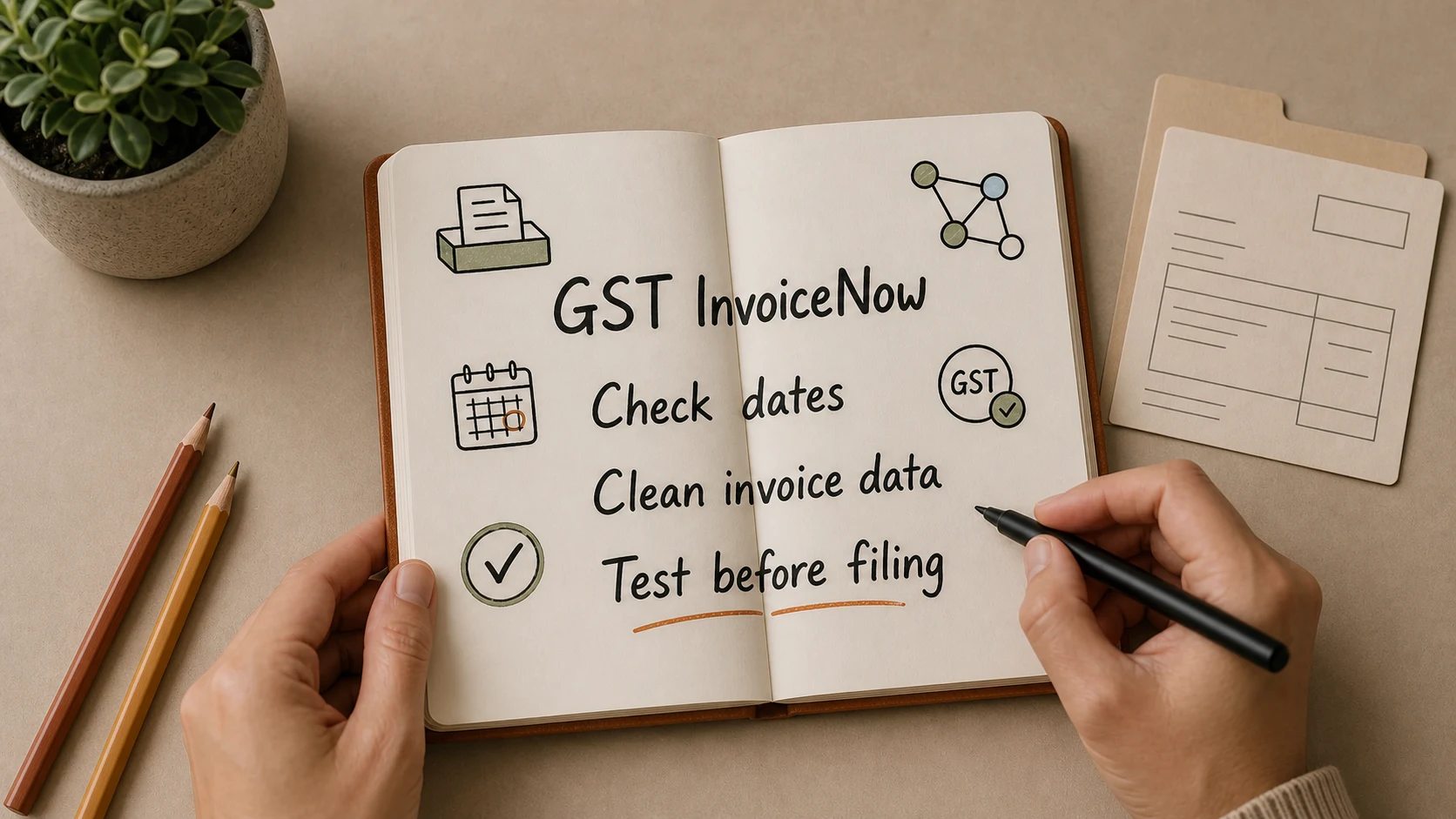
Singapore’s GST InvoiceNow Requirement means GST-registered businesses will need to transmit invoice data to IRAS through InvoiceNow-ready solutions, using the InvoiceNow network. The rollout is phased, so the first task is to check which date applies to your business, then make sure your invoice records are clean enough to move through a structured digital workflow.
For small businesses, this is not only a tax deadline. It is an invoice-data exercise: customer details, supplier records, line items, GST treatment, credit notes and supporting records all need to be reliable before software can transmit them confidently.
Treat GST InvoiceNow as a bookkeeping-readiness project. The deadline matters, but the real work is getting invoice data clean before the transmission workflow goes live.
Quick answer
GST InvoiceNow is Singapore’s phased requirement for GST-registered businesses to submit invoice data to IRAS through the InvoiceNow network. IRAS says new voluntary GST registrants from 1 April 2026 are included, while existing GST-registered businesses move into the requirement by annual-supply bands from 1 April 2028 through 1 April 2031.
The official IRAS GST InvoiceNow Requirement page is the key source for dates, exclusions and setup steps. IMDA’s InvoiceNow page explains the nationwide e-invoicing network and Peppol framework behind the workflow.
Key points
- GST InvoiceNow is Singapore-specific; do not apply the dates to Australia, New Zealand, Ireland or Canada.
- The obligation is phased by registration status and annual supplies, so each business should confirm its own date.
- InvoiceNow sends structured invoice data through a network, rather than relying only on PDF or paper invoices.
- Clean invoice, GST and customer records matter before the software connection is switched on.
- Accounting software helps with the record workflow, but it does not decide GST treatment for you.
Who must comply and when?
IRAS says GST-registered businesses will be required to submit invoice data to IRAS via InvoiceNow in phases. The practical timeline is:
| Implementation date | Who it applies to |
|---|---|
| 1 November 2025 | Companies that register for GST voluntarily within 6 months of incorporation |
| 1 April 2026 | All new voluntary GST registrants, regardless of incorporation date or business structure |
| 1 April 2028 | New compulsory GST registrants and existing GST-registered businesses with total annual supplies of S$200,000 or less |
| 1 April 2029 | Existing GST-registered businesses with total annual supplies of S$1,000,000 or less |
| 1 April 2030 | Existing GST-registered businesses with total annual supplies of S$4,000,000 or less |
| 1 April 2031 | Existing GST-registered businesses with total annual supplies above S$4,000,000 |
IRAS says total annual supplies for existing GST-registered businesses are based on Box 4 of the GST return for prescribed accounting periods ending in calendar year 2025. Businesses registered before 2026 should check their IRAS notification and use official tools or advice before relying on a date.
What GST InvoiceNow changes
Traditional invoicing often leaves the business with a PDF invoice, an email trail and a separate accounting entry. InvoiceNow is different because structured invoice data travels through the network in a format finance systems can process.
That changes the weak spots:
| Area | Old pain point | GST InvoiceNow readiness question |
|---|---|---|
| Customer details | Names and addresses vary between invoices | Are customer records complete and consistent? |
| GST coding | GST is selected manually line by line | Are tax codes reviewed before invoices are sent? |
| Invoice numbers | Duplicates or gaps are found later | Are invoice sequences controlled? |
| Credit notes | Adjustments sit outside the original sale | Are credit notes linked to the right invoice? |
| Supplier bills | PDFs are stored separately from entries | Can bill data be reviewed and traced? |
| Audit trail | Changes are hard to reconstruct | Can the business show who changed what and when? |
The software connection matters, but data quality comes first. A messy invoice process does not become reliable just because it becomes electronic.
What to check before your phase starts
Start with the practical parts of the invoice workflow:
- Confirm your GST registration status and likely implementation date.
- Review customer and supplier master records.
- Check that GST registration numbers, UENs, addresses and email details are current where relevant.
- Review invoice templates, line-item descriptions and GST treatment.
- Test credit notes, cancelled invoices and adjusted invoices.
- Reconcile unpaid invoices and supplier bills so old errors do not enter the new process.
- Decide who owns InvoiceNow setup, testing and exception handling.
- Speak with your accountant or adviser before relying on tax settings for unusual transactions.
If you are still learning the concepts, start with eInvoicing, invoice, tax invoice, and GST - Goods and Services Tax.
Simple example
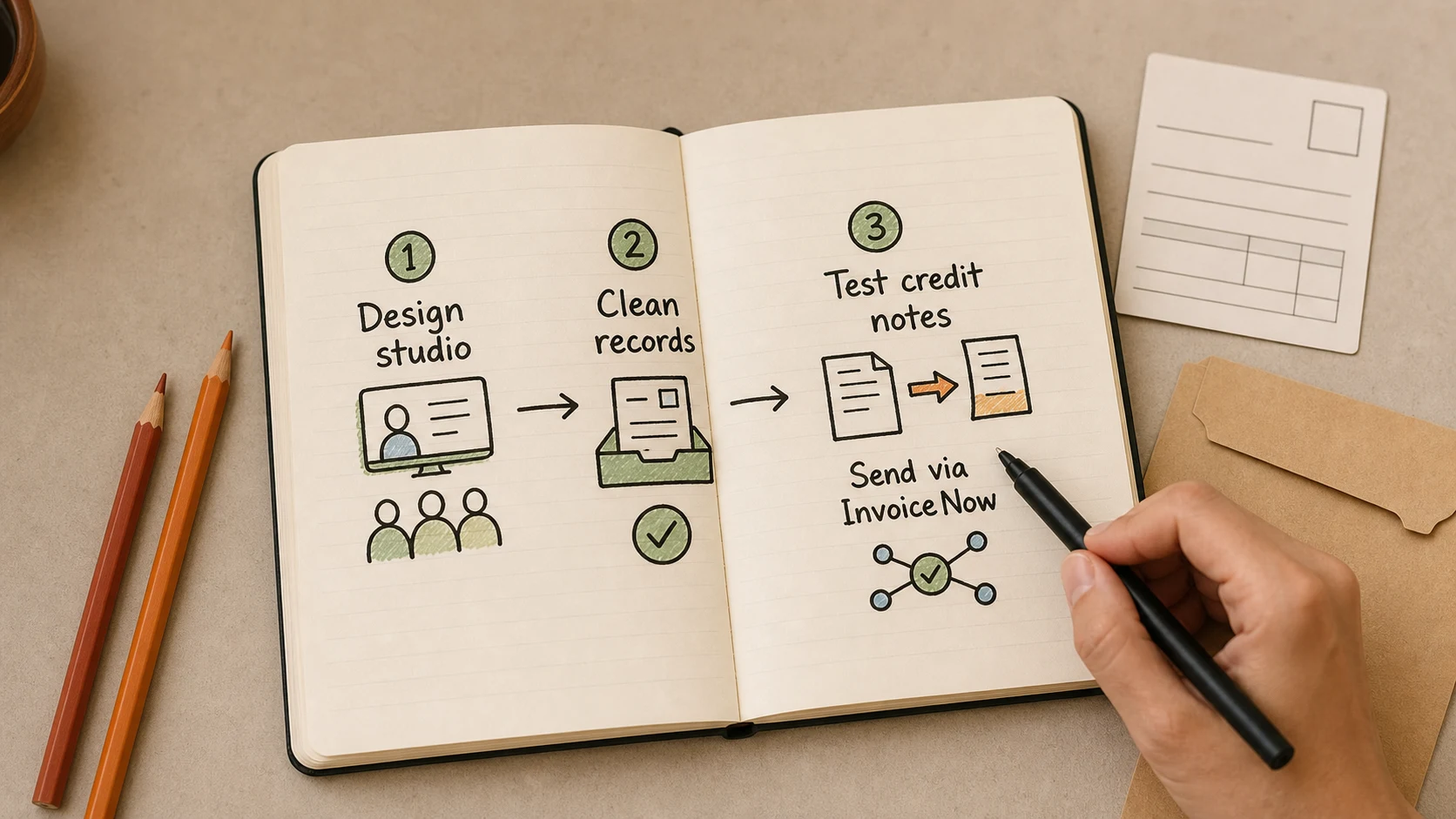
Imagine a Singapore design studio that is voluntarily registering for GST after 1 April 2026. Before the first GST return under the new workflow, the owner reviews the invoice process.
They find three small problems: customer names are entered inconsistently, some invoice descriptions are too vague, and credit notes are not always linked to the original invoice. None of those issues is dramatic, but each one can make structured invoice data harder to trust.
The studio fixes the customer records, tightens invoice descriptions, tests credit notes, then confirms the InvoiceNow-ready workflow with its software provider. By the time GST InvoiceNow applies, the business is not scrambling to clean up old records while trying to meet a new transmission process.
How Gimbla fits into the workflow
Gimbla’s Singapore accounting software page is written for businesses that need invoicing, expenses, GST-friendly records and practical bookkeeping tools. Start there if you want the product context: free accounting software for Singapore.
If you are also reviewing company tax support for YA 2026, keep the workflows separate. GST InvoiceNow is about invoice data and GST reporting, while the Singapore CIT rebate and cash grant checklist is about income tax relief, CPF evidence, notices and bank reconciliation.
Inside the books, the supporting workflow is familiar:
- create invoices with clear customer, line item, GST and due-date details
- keep supplier bills and expense records close to the transaction
- review GST, VAT or sales tax settings before reporting
- use bank reconciliation to confirm whether invoices and bills have been paid
- keep an audit trail for changes, adjustments and credit notes
The create an invoice guide, GST, VAT and sales tax guide, bank reconciliation guide, and credit note guide cover the everyday habits that make the transition easier.
Common mistakes to avoid
Waiting for the deadline before cleaning records
The deadline is not the best time to discover duplicate customer records, unclear line items or unreconciled invoices.
Treating PDF invoices as enough
InvoiceNow is about structured invoice data. A PDF may still be useful as supporting evidence, but the data in the accounting workflow needs to be complete and consistent.
Assuming the same rules apply in every country
Singapore’s GST InvoiceNow dates are not the same as Australia’s eInvoicing approach, New Zealand’s Peppol work, Ireland’s VAT Modernisation or Canada’s GST/HST processes. Keep each market’s rules separate.
Letting tax settings run unchecked
Software can apply tax codes, but it cannot understand every contract, exemption, import, cross-border supply or special GST treatment without human review.
Practical checklist
Before your GST InvoiceNow phase, check:
- your implementation date using IRAS guidance
- whether any exclusion or special case needs advice
- customer and supplier details
- GST treatment on common invoices and bills
- invoice numbering and credit note workflow
- access controls for staff and advisers
- bank reconciliation and unpaid invoice review
- who will test InvoiceNow transmission before the mandatory date
FAQs
Is GST InvoiceNow required for every Singapore business?
No. The requirement is for GST-registered businesses in phases. IRAS also lists excluded business groups, including certain overseas entities and businesses liable to register wholly because of the reverse charge regime. Check the current IRAS guidance for your facts.
Does InvoiceNow replace normal invoice checking?
No. InvoiceNow changes how invoice data is exchanged and submitted. It does not remove the need to check customers, suppliers, invoice descriptions, GST treatment, payment status and supporting records.
What should a small business prepare first?
Start with clean invoice data. Confirm the date that applies to your business, tidy customer and supplier records, review GST coding, test credit notes and decide who owns the InvoiceNow setup.
In short
GST InvoiceNow is a Singapore compliance change, but the preparation is mostly everyday bookkeeping discipline. Clean invoice data, clear GST treatment, reconciled payments and a working audit trail will make the technical setup much less painful.