ATO Credit Card Payments: Plan for the 2027 Change
Published | Team Gimbla
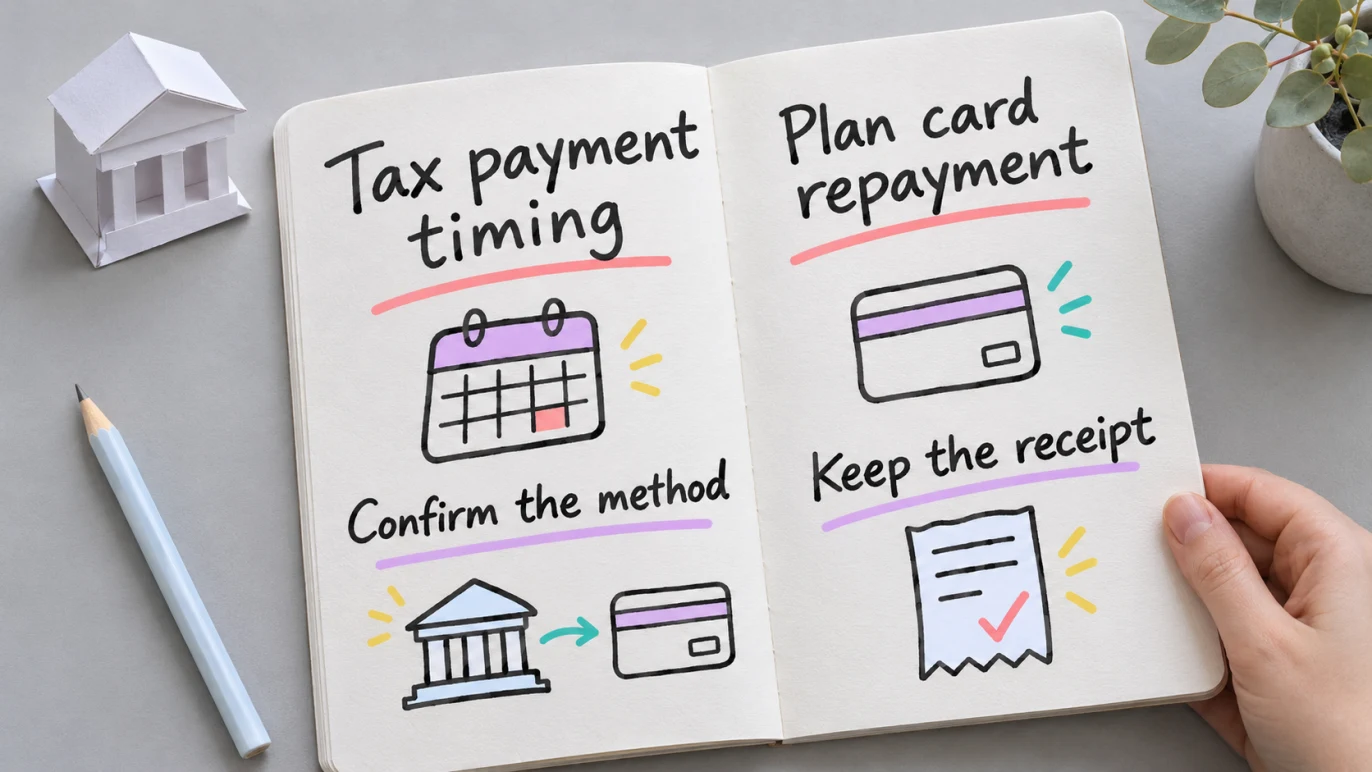
Australian small businesses can still make ATO credit card payments under the extended transition announced on 9 October 2026. For owners who use a card to bridge the gap between a BAS bill and customer receipts, the extra time is useful: review the payment route now and put the later card repayment into your cash plan.
The bookkeeping needs to follow both stages. A tax payment on the card and a bank payment clearing that card balance are two different movements.
Put the card repayment into your cash forecast when you arrange the tax payment.
Quick answer
The ATO will continue accepting direct credit card payments until 30 June 2027. Under the announced arrangements, credit card payments through third-party providers can continue after that, alongside other payment methods such as debit card and bank transfer. The Treasury announcement confirms the extended transition and ongoing consultation.
This changes the payment channel, not the due date shown for your tax obligation. Check current ATO instructions before paying, then compare the full cost and timing of the available routes.
Key points
- Keep the ATO payment date and the card repayment date visible in your cash plan.
- Check the payment reference for the tax account you intend to pay.
- Compare issuer terms, provider fees and processing times before changing methods.
- Reconcile the tax account, credit card and bank separately so the same liability is cleared only once.
What each payment route means for cash flow
Start with the week money will leave your bank account. A payment method can change that timing without changing the underlying tax bill.
| Payment route | What to forecast | Evidence to keep |
|---|---|---|
| Direct credit card payment | The later card repayment, plus any applicable issuer charges | ATO receipt, card transaction and repayment statement |
| Debit card or bank transfer | The payment from available bank funds | Payment confirmation and the matching ATO account entry |
| Credit card through a third-party provider | Card repayment and provider charges, allowing time for onward payment | Provider receipt, fee evidence and confirmation the ATO received the payment |
| Agreed ATO payment plan | Each instalment, any interest and new tax obligations | Approved arrangement, instalment payments and ATO account statements |
For a card-funded payment, check the statement cycle, repayment due date, available limit and whether interest-free terms apply to your transaction. Do not assume the maximum advertised interest-free period applies to a payment made today.
If you use a provider, verify its credentials and payment instructions independently. Check when it will send the funds, which reference it will use and how you will confirm receipt by the ATO. A provider confirmation and an ATO account credit are separate pieces of evidence.
A credit card payment is separate from an ATO payment plan
Paying tax with a credit card leaves you owing the card issuer. An ATO payment plan is an agreed arrangement to repay the tax debt itself in instalments.
The ATO’s payment-plan guidance for small businesses explains that tax debts on a plan can attract the general interest charge, and that new lodgement and payment obligations continue. Confirm the terms available for your circumstances rather than assuming an arrangement is interest-free.
If the forecast shows that neither a bank payment nor a later card repayment is affordable, speak with the ATO or your registered tax professional early. Prepare the amount owing, realistic customer receipt dates and essential payments for that conversation. Keep ATO interest charges identifiable in the accounts so your adviser can review their treatment.
Simple example
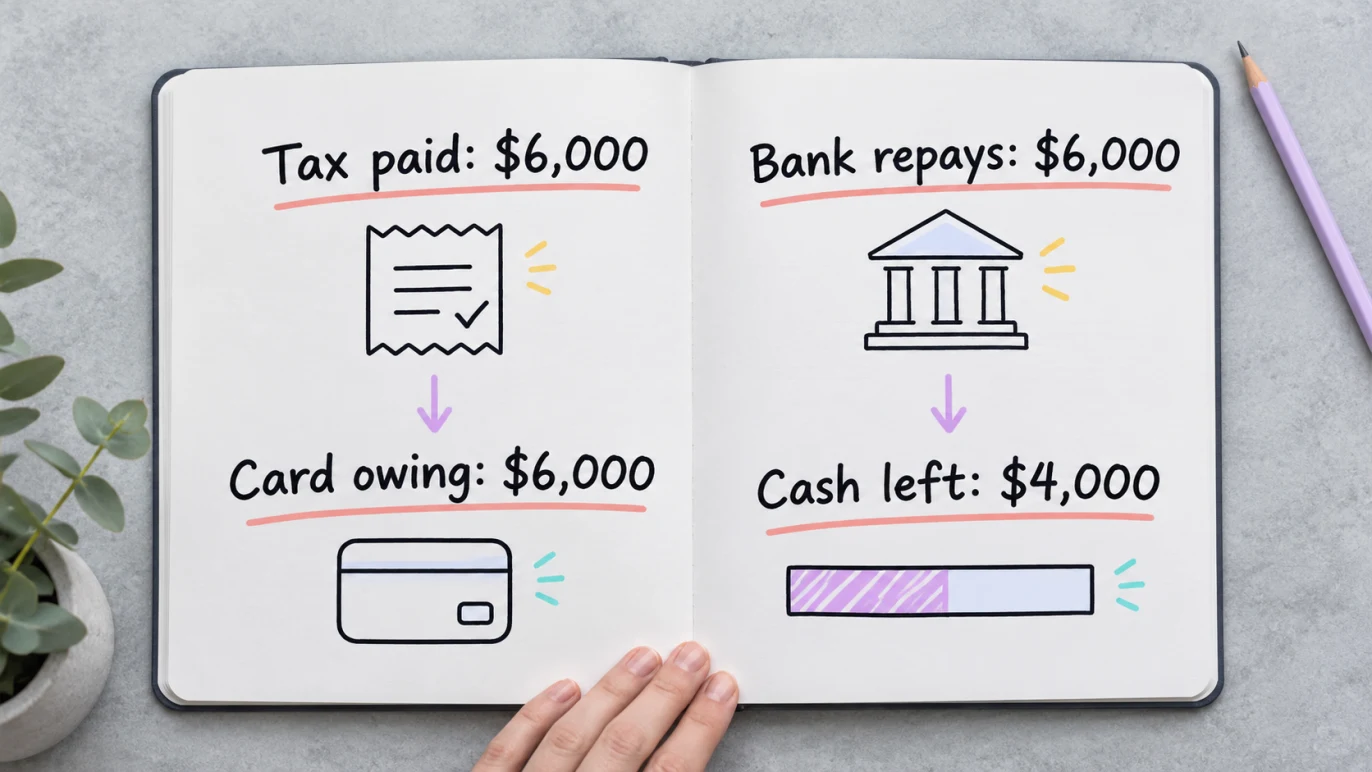
An Australian design business has $10,000 in its bank account and an already-recorded $6,000 BAS liability. It pays that BAS with its business credit card during the current transition, then repays the card in full from the bank. Assume no other transactions, fees or interest.
When the payment is credited to the ATO account, the BAS liability is cleared and the business owes $6,000 on its card. Its bank still holds $10,000, but the cash plan must reserve $6,000 for the card repayment.
After the bank pays the card, the card balance is cleared and $4,000 remains in the bank. That repayment clears the card liability; it does not create another tax expense. The example assumes both the bank account and the card belong to the business. A payment made on an owner’s personal card needs separate treatment with the bookkeeper or accountant.
Keep a clear trail from the tax account to the bank
For each payment, keep the tax type, period, amount, payment reference and confirmation together. Then review three records:
- ATO account: confirm the payment reached the intended account and investigate any remaining balance.
- Credit card: match the tax payment and identify fees or interest separately.
- Bank: match the later card repayment to the reduction in the card balance.
If a BAS payment covers several liabilities, use the allocation agreed with your adviser. Coding the whole payment to a generic expense can leave tax control accounts uncleared and distort the profit and loss. Likewise, a card repayment should not be coded to tax again simply because the bank description mentions the ATO.
Record the two stages in Gimbla
Set up the business card separately from its operating bank account. Gimbla’s bank account and credit card guide explains how the card links to a liability account.
Record the card-funded tax payment against the appropriate tax liabilities, using your adviser’s allocation. When the operating bank repays the card, record the movement between those two accounts as a transfer. Use bank reconciliation to match each statement movement to the entry already recorded, avoiding duplicate entries when both accounts show the transfer.
Keep the repayment in your 12-week cash budget, alongside supplier payments, wages and other commitments. Treat expected customer collections cautiously: an accounts receivable ageing review can help identify receipts that may arrive later than planned.
Gimbla records and reconciles these transactions. Make the actual tax payment through your chosen payment channel.
Before your next tax payment
Confirm the amount and due date against the current ATO account, then choose the route before the last day available for processing. Check the reference and payment limits, save the receipt and assign someone to confirm the ATO account credit.
If you use a card, add its repayment to the cash flow forecast immediately. Review recurring payment instructions as part of the transition, and check official updates before setting up payments beyond the announced period.
Frequently asked questions
Can I still pay BAS by credit card?
Yes. Under the announced transition, the ATO continues accepting direct credit card payments until 30 June 2027. Use the payment instructions for your activity statement account and allow for processing time.
Is it worth paying a tax bill with a credit card?
Compare the timing benefit with any provider fees, card interest and repayment risk. Check your issuer’s terms for government payments and rewards. A card only helps cash flow if the business can fund the later repayment.
Can I use an ATO payment plan instead?
You may be eligible for an agreed instalment arrangement. Confirm eligibility, interest and repayment terms with the ATO or your registered tax professional. New lodgement and payment obligations continue while an existing debt is on a plan.