12-Week Cash Budget: Keep Payments Visible Before Cash Gets Tight
Published June 13th, 2026 | Team Gimbla
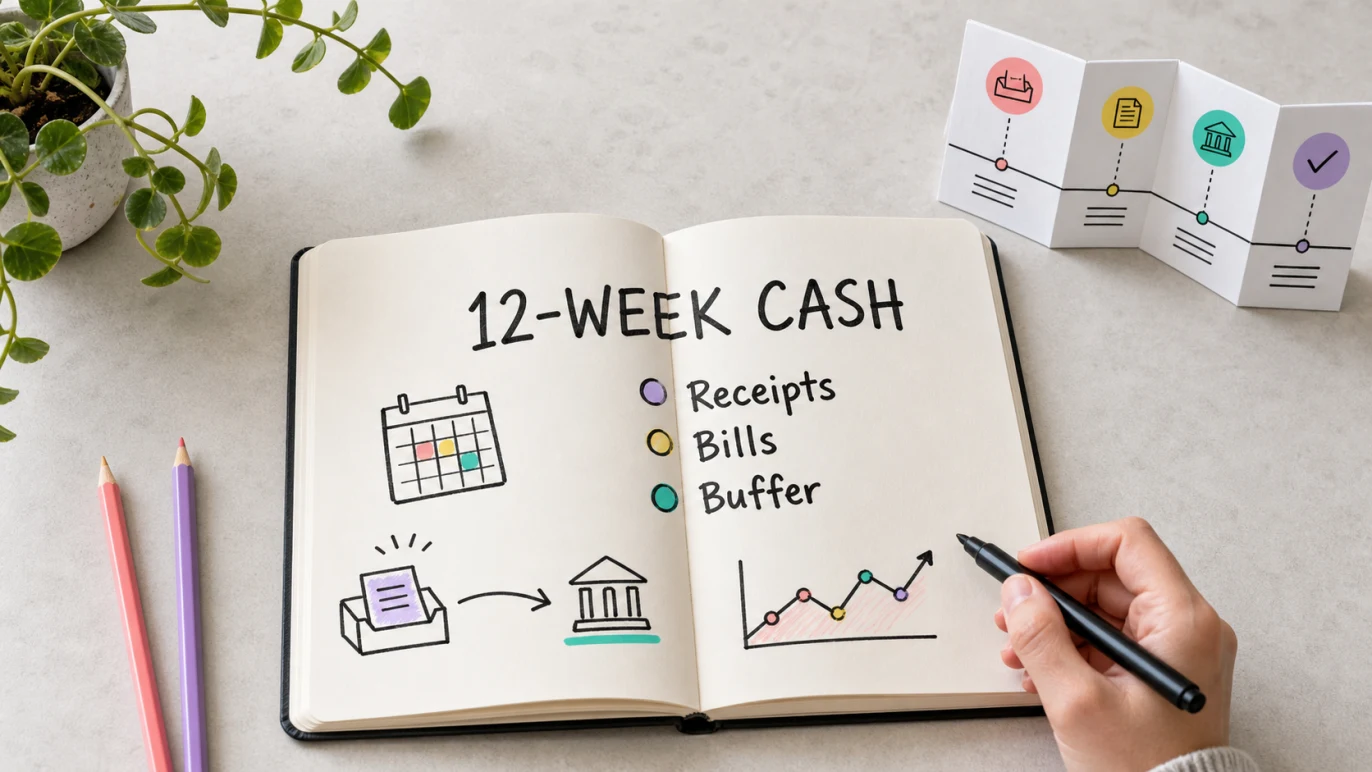
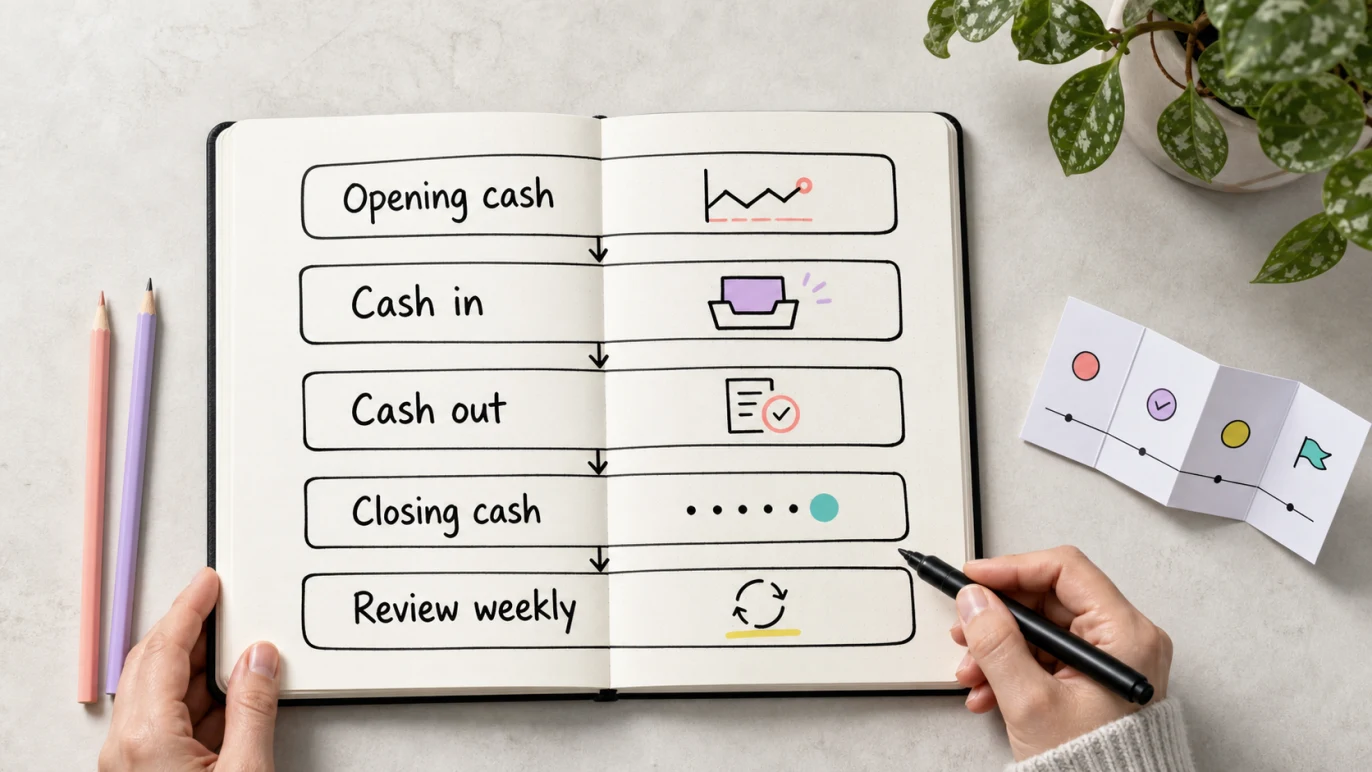
A 12-week cash budget helps a small business see whether expected cash receipts will arrive before supplier bills, wages, tax, super, rent, loan payments and owner decisions need cash. It is a short-term planning view: start with the reconciled bank balance, add money likely to arrive, subtract money due to leave, then review the closing cash balance week by week.
The point is not to predict every dollar perfectly. The point is to find the next pressure point early enough to collect sooner, delay a discretionary spend, negotiate timing, adjust drawings or ask an adviser before the bank balance becomes the problem.
A useful cash budget turns cash pressure into a visible calendar: what is due, what is expected and which week needs attention.
Quick answer
A 12-week cash budget is a weekly cash plan for the next three months. It usually includes opening cash, expected customer receipts, supplier payments, wages, tax, super, rent, loan repayments, owner drawings and closing cash for each week.
The Australian Government’s cash flow statement guide explains that cash-flow forecasts estimate future sales and costs and can help identify shortages and surpluses. The ATO’s cash flow guidance also points small businesses to planned costs such as wages, equipment and tax.
For everyday bookkeeping, treat the 12-week cash budget as the operating version of a Cash Flow Forecast: shorter, more practical and updated whenever real invoices, bills, pay runs or tax dates change.
Key points
- A 12-week view is long enough to see payroll, rent, GST, BAS, super, supplier and loan timing.
- Use likely payment dates, not invoice dates, when forecasting customer receipts.
- Review the forecast against bank reconciliation so it stays grounded in real cash.
- Keep tax, super, loan repayments and owner drawings visible instead of treating them as surprises.
- Update the budget weekly so it becomes a live planning habit, not a stale spreadsheet.
What goes into a 12-week cash budget
Start with the records that already exist in the business. The best cash budget is built from invoices, bills, payroll and bank activity, not from round-number optimism.
| Cash Budget Line | Where To Get It | What To Watch |
|---|---|---|
| Opening cash | Reconciled bank balance | Unreconciled bank items can make the budget look safer than it is. |
| Customer receipts | Open invoices, payment terms and debtor history | Use realistic receipt dates if customers normally pay late. |
| Supplier payments | Open bills, recurring subscriptions and supplier terms | Separate must-pay bills from discretionary timing decisions. |
| Payroll and super | Pay runs, rosters, timesheets and super reports | Include wages, PAYG withholding, super and contractor payments where relevant. |
| Tax and finance payments | BAS, GST, PAYG instalments, loan schedules and adviser notes | Put known due dates into the week they affect cash. |
| Owner decisions | Drawings, dividends, asset purchases and hiring plans | Test the cash effect before committing. |
Cash budget vs cash flow forecast
The terms are often used together, but they are not always the same planning view.
A Cash Flow Forecast estimates cash coming in and going out over a future period. It may support a business plan, lender conversation, board report, funding application or longer-range planning.
A Cash Budget is usually more immediate. It answers a weekly operating question: will the business have enough cash on hand when payments are due?
That distinction matters. A six-month forecast can show the business is viable overall, while a 12-week cash budget can reveal that week 5 is tight because payroll, rent and a GST payment land before two large customer receipts arrive.
Simple example
A small design studio starts week 1 with $18,000 in the bank after reconciliation. It expects customer receipts, supplier bills, payroll, software subscriptions, a loan repayment and a quarterly tax payment over the next four weeks.
| Cash Budget Line | Week 1 | Week 2 | Week 3 | Week 4 |
|---|---|---|---|---|
| Opening cash | $18,000 | $20,500 | $13,700 | $16,900 |
| Expected cash in | $9,500 | $4,200 | $11,000 | $6,800 |
| Expected cash out | -$7,000 | -$11,000 | -$7,800 | -$14,200 |
| Expected closing cash | $20,500 | $13,700 | $16,900 | $9,500 |
The business is not out of cash, but week 4 is tighter because the tax payment and payroll fall before the next large receipt. That gives the owner choices: follow up receivables now, move a discretionary purchase, reduce drawings for the month or talk to the accountant before the pressure lands.
How to build the first version
Use a simple weekly grid first. More detail can come later.
- Reconcile the bank so the opening balance is real.
- List open invoices by the date you expect payment, not just the invoice due date.
- List open bills, rent, subscriptions, loan payments and known supplier commitments.
- Add payroll, PAYG withholding, super and contractor payments by expected payment week.
- Add GST, BAS, VAT, sales tax, income tax instalments or other local tax payments where they apply.
- Add planned owner drawings, dividends, equipment purchases or hiring costs.
- Calculate closing cash for each week.
- Mark any week where closing cash falls below the buffer the business wants to keep.
The first version will be imperfect. That is fine. The habit improves as you compare forecast dates with actual bank activity.
What to check before relying on it
Cash budgets become risky when they are treated as exact predictions. Before using one to make a hiring, stock, loan, dividend or owner-drawing decision, check the assumptions.
Customer payment timing
Do not assume customers will pay on the invoice due date if they usually pay later. Use the pattern your accounts receivable records show.
Tax and super timing
Tax, GST, VAT, PAYG withholding, payroll deductions, super and pension payments are often predictable. Put them into the actual week they affect cash.
One-off payments
Insurance renewals, equipment deposits, large supplier orders, annual software subscriptions and loan balloon payments can distort one week. Add them separately so they are visible.
Bank reconciliation
If the bank is not reconciled, the opening cash number may be wrong. A good forecast built on a stale bank balance is still unreliable.
How Gimbla helps keep the numbers current
Gimbla keeps the cash-budget inputs close to the bookkeeping workflow:
- invoices show expected customer receipts
- bills and accounts payable show expected supplier payments
- bank reconciliation confirms opening cash and actual movement
- accounts receivable ageing shows which receipts may slip
- payroll records help place wages, PAYG withholding and super in the right week
- reports such as the Profit and Loss guide and cash flow statement help compare cash timing with profit and formal reporting
When those records are current, the 12-week cash budget can be updated quickly instead of rebuilt from scratch.
Weekly review rhythm
Set one weekly cash-budget routine:
- Reconcile the bank.
- Move paid invoices and bills out of the forecast.
- Shift unpaid invoices to a more realistic receipt week.
- Add new bills, payroll, tax dates and owner decisions.
- Check the lowest closing cash week in the next 12 weeks.
- Decide the next action before the tight week arrives.
This is where the budget becomes useful. It stops being a static spreadsheet and becomes a decision rhythm.
Frequently asked questions
What is a 12-week cash budget?
A 12-week cash budget is a short-term cash plan that lists expected receipts, payments and closing cash balances for each of the next 12 weeks. It helps a business see shortfalls before payments are due.
Is a cash budget the same as a cash flow forecast?
They overlap. A cash budget is usually the weekly operating view used for near-term decisions. A cash flow forecast can be broader and may support business planning, lender conversations or longer-range reporting.
How often should a 12-week cash budget be updated?
Update it at least weekly. Review it sooner when a large customer receipt slips, a payroll amount changes, a tax date approaches, or a supplier payment becomes urgent.
What should small businesses put in a cash budget?
Start with opening cash, expected customer receipts, supplier payments, wages, super, tax, loan repayments, owner drawings and closing cash for each week. Add more detail only when it helps a decision.
In short
A 12-week cash budget gives small businesses a clear view of near-term cash timing. It does not need to be complex. Start with reconciled cash, realistic receipts, known payments and a weekly review habit. The value is seeing the tight week early enough to act.