Tradie Accounting Software: What Australian Contractors Need
Published May 19th, 2026 | Team Gimbla
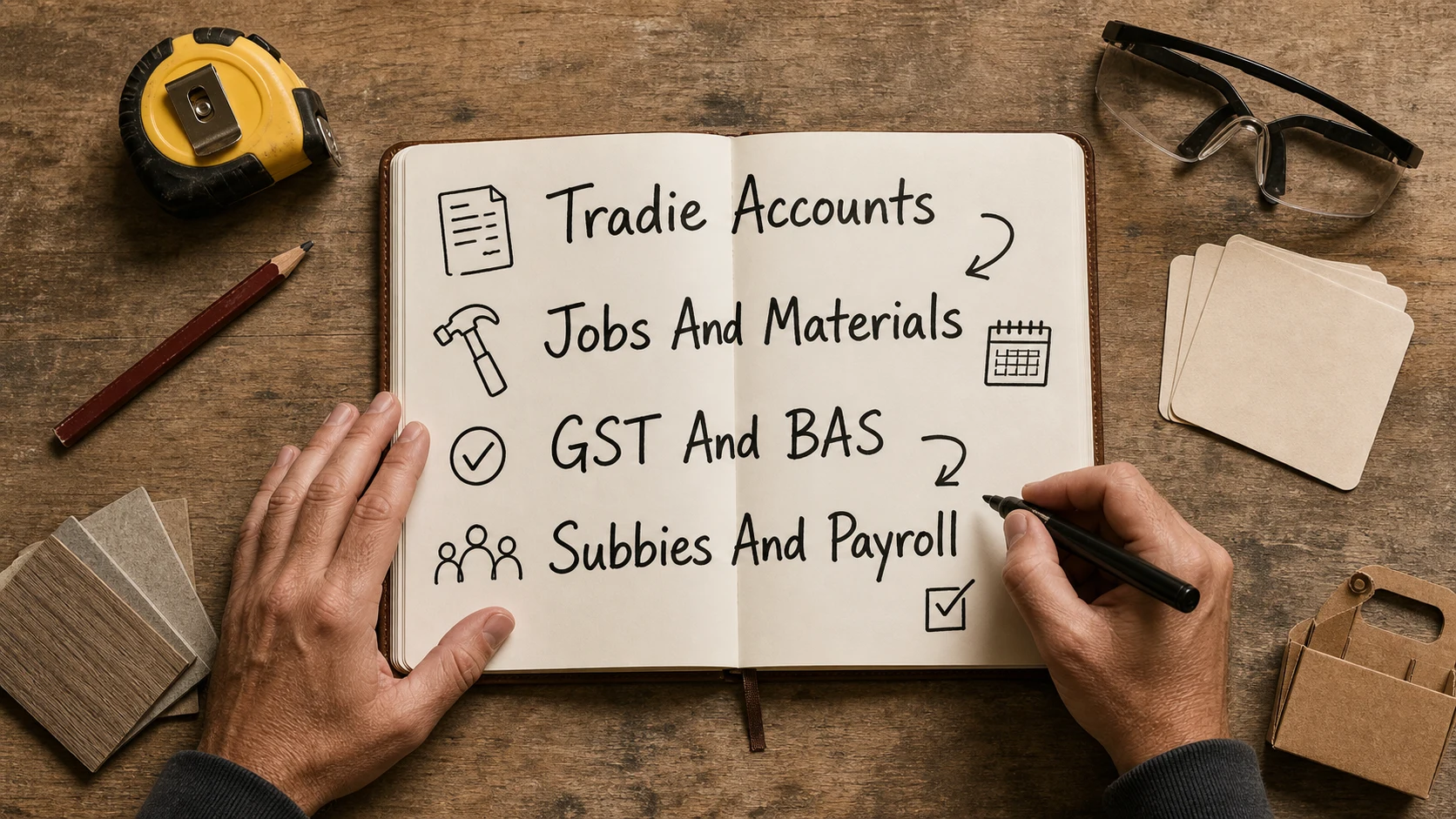
Tradie accounting software should help an Australian contractor keep jobs, materials, invoices, expenses, GST, BAS and payroll records under control. It does not replace a good accountant or tax agent, but it should make the day-to-day bookkeeping easier, especially when work moves between the ute, the job site and the office.
The best setup depends on how you work. A sole trader doing a few simple jobs may only need clean invoices and expense tracking. A builder, electrician, plumber, landscaper or maintenance business with employees and subcontractors may need project reports, bank feeds, payroll, super records and Taxable payments annual report details as well.
Good tradie accounting software keeps the job record and the money record close together: what was quoted, what was bought, what was invoiced, what was paid and what still needs attention.
Quick Answer
For most Australian tradies, accounting software is worth considering when you need to:
- send professional invoices and track unpaid customer balances
- record material costs, supplier bills, fuel, tools, insurance and vehicle expenses
- separate business and personal transactions
- reconcile bank and card payments against invoices and bills
- track GST, prepare BAS figures and keep tax invoice records
- manage employees, apprentices, super and Single Touch Payroll
- keep contractor payment details for TPAR where it applies
- see which jobs are profitable, not just whether the bank balance looks healthy
The legal requirement is not “use software”. The practical requirement is reliable records. The Australian Taxation Office says most business records must be kept for 5 years and must be protected from being changed or damaged.
Key Points
- Tradies need accounting software that works around real jobs: deposits, progress claims, materials, subcontractors, travel, tools and delayed customer payments.
- GST registration generally becomes required when GST turnover reaches $75,000 or more, and the ATO says businesses must register within 21 days once required.
- If you pay contractors for building and construction services, TPAR records can matter just as much as invoice records.
- Payroll adds another layer: employee records, pay slips, PAYG withholding, super and STP need a controlled process.
- A simple system used weekly is better than a complicated system ignored until BAS or tax time.
What Tradie Accounting Software Needs To Do
Tradie bookkeeping has a different shape from a desk-based service business. Costs arrive through supplier counters, fuel stations, subcontractor invoices, tool purchases, job deposits, progress payments and card transactions. The software needs to make those pieces easy to capture before the details disappear.
At a minimum, look for tools that can handle:
- customer invoices, deposits, progress payments and payment status
- supplier bills for materials, equipment hire and subcontractors
- receipt capture or bill upload for small purchases
- bank feeds or bank statement imports
- bank reconciliation, so payments match the accounting records
- GST tax codes and BAS-ready reporting
- profit and loss, balance sheet and cash flow reports
- project or job tracking if you need to understand margin by job
- payroll and super if you employ staff or apprentices
If you quote jobs in another app, use scheduling software or manage field staff separately, your accounting system should still be the source of truth for invoices, payments, GST and reports.
Feature Checklist For Tradies
| Feature | Why it matters for tradies | What to check before choosing software |
|---|---|---|
| Invoicing | Turns quoted or completed work into money owed by the customer | Can you issue invoices quickly, mark payments and follow up overdue amounts? |
| Job or project tracking | Shows whether labour, materials and subcontractors are eating the margin | Can income and costs be grouped by job, project or location? |
| Bills and receipts | Keeps supplier invoices, tool purchases, fuel and insurance together | Can you upload or record purchase evidence while details are fresh? |
| GST and BAS | Helps GST-registered tradies review sales, purchases and BAS amounts | Are GST codes clear and can reports support BAS preparation? |
| Bank reconciliation | Finds missing invoices, duplicate entries and uncoded spending | Can bank transactions be matched to invoices, bills and direct payments? |
| Payroll | Supports wages, PAYG withholding, super and employee records | Is STP available, and does the pay run fit your roster or apprentice setup? |
| Contractor records | Helps with subcontractor review and possible TPAR reporting | Can you identify contractor payments, ABNs and payment totals for the year? |
GST, BAS And Tax Invoices
GST is where many growing trade businesses outgrow spreadsheets. The ATO’s GST registration guidance says you reach the GST turnover threshold if current or projected GST turnover is $75,000 or more, or $150,000 or more for non-profit organisations. Once required to register, you generally need to do so within 21 days.
Once registered, you need to track GST on taxable sales, GST credits on business purchases and the figures that support your BAS. For a tradie, that usually means keeping supplier tax invoices for materials and equipment, correctly coding mixed expenses and making sure customer invoices show the right GST treatment.
The ATO also says that if a customer asks for a tax invoice, you must generally provide one within 28 days unless the sale is $82.50 including GST or less. Its tax invoice guidance explains what a valid tax invoice needs to show.
Software helps because GST is captured as part of the normal workflow. You invoice the customer, enter or upload the supplier bill, reconcile the bank payment and review the BAS report before lodging or sending it to your BAS agent.
Subbies, Employees And Payroll Records
Many trade businesses use a mix of employees, apprentices and subcontractors. The records are not interchangeable.
If you pay contractors for building and construction services, the ATO says those payments may need to be reported in a Taxable payments annual report, usually due by 28 August each year. It also says payments can include both labour and materials if they appear on the same contractor invoice.
If you employ staff, payroll records need more structure. The Fair Work Ombudsman says employers must keep accurate and complete employee records and issue pay slips, with employee records kept for 7 years. Payroll software should help you run pays, report STP, keep PAYG withholding details and manage super.
Contractors can also raise super questions. The ATO explains that some independent contractors paid mainly for their labour may be treated as employees for super guarantee purposes. If you use subcontractors regularly, keep clear agreements, invoices and payment records, and get advice where the worker classification is not obvious.
A Simple Weekly Workflow
Tradie bookkeeping works best when it is part of the rhythm of the business, not a once-a-quarter rescue mission.
- Create the customer invoice as soon as a deposit, stage claim or completed job is ready.
- Upload supplier bills, receipts and subcontractor invoices before they sit in the glovebox for a month.
- Match bank transactions to invoices, bills and direct payments.
- Review any uncoded or personal transactions while you still remember what they were.
- Check unpaid invoices and follow up the ones that are overdue.
- Review GST, BAS and payroll reports before lodging or sending work to your accountant.
- Look at job or project profitability so the next quote reflects real labour and material costs.
This routine is small enough to keep, but it protects the information you need later.
How Gimbla Fits A Tradie Workflow
Gimbla is built for small businesses that want practical accounting without unnecessary admin. For a tradie, that can mean using one system for invoices, supplier bills, bank reconciliation, GST reporting, payroll and business reports.
Useful starting points include:
- creating customer invoices with the invoice guide
- using the free invoice generator when you need a quick invoice format
- keeping transactions tidy with bank feeds and bank reconciliation
- tracking work with projects when job profitability matters
- reviewing GST settings with the GST, VAT and sales tax guide
- preparing for BAS with BAS lodgment tools
- managing staff through Single Touch Payroll
You do not need to make the accounting system more complicated than the business. Start with invoices, expenses and bank reconciliation, then add projects, payroll or more detailed reporting when the work justifies it.
Common Mistakes To Avoid
Choosing Field Software And Forgetting The Accounts
Scheduling, job dispatch and quoting tools can be useful, but they are not a substitute for accounting records. Make sure invoices, payments, GST, BAS and reports still flow into a system your accountant can trust.
Recording Materials Without A Job Link
Materials can make a job look profitable until the supplier bills catch up. If your margins are tight, link major material costs and subcontractor bills to the job or project they belong to.
Leaving Subcontractors In A Generic Expense Category
If contractor payments may be reportable through TPAR, keep them easy to identify. Record the contractor name, ABN, invoice details and payment amounts clearly.
Relying On The Bank Balance
A healthy bank balance can hide GST you owe, unpaid supplier bills, upcoming wages or an overdue customer invoice. Accounting reports give a clearer picture than the bank app alone.
Frequently Asked Questions
What Accounting Software Features Do Tradies Need?
Most tradies need invoicing, expense capture, job or project tracking, bank reconciliation, GST reporting, BAS preparation and clean reports for their accountant. If you have staff, add payroll, super and STP to the must-have list.
Do Tradies Need Accounting Software For GST?
No software is compulsory, but GST-registered tradies need reliable records for GST collected and GST credits claimed. Accounting software usually makes BAS preparation easier because GST is coded as transactions are entered and reconciled.
Should Tradies Track Subcontractors Separately?
Yes. If you pay contractors for building and construction services, you may need contractor details for TPAR. Keeping subcontractor invoices and payments separate from general supplier costs makes the annual review much easier.
Is Project Tracking Worth It For Small Trade Businesses?
It is worth it when you want to know which jobs actually make money. Even simple project tracking can show whether labour, materials, equipment hire and subcontractors are being recovered properly in your quotes and invoices.
The Bottom Line
Tradie accounting software should make the practical work easier: invoicing customers, recording job costs, reconciling payments, tracking GST, preparing BAS and keeping payroll or contractor records tidy.
Choose the system that fits the way you already work, then build a simple weekly routine around it. That is what turns accounting software from another admin tool into something that helps you price better, chase money sooner and stay ready for tax time.