SBSCH Closed: Reconciling Payday Super After 1 July 2026
Published May 24th, 2026 | Updated August 6th, 2026 | Team Gimbla
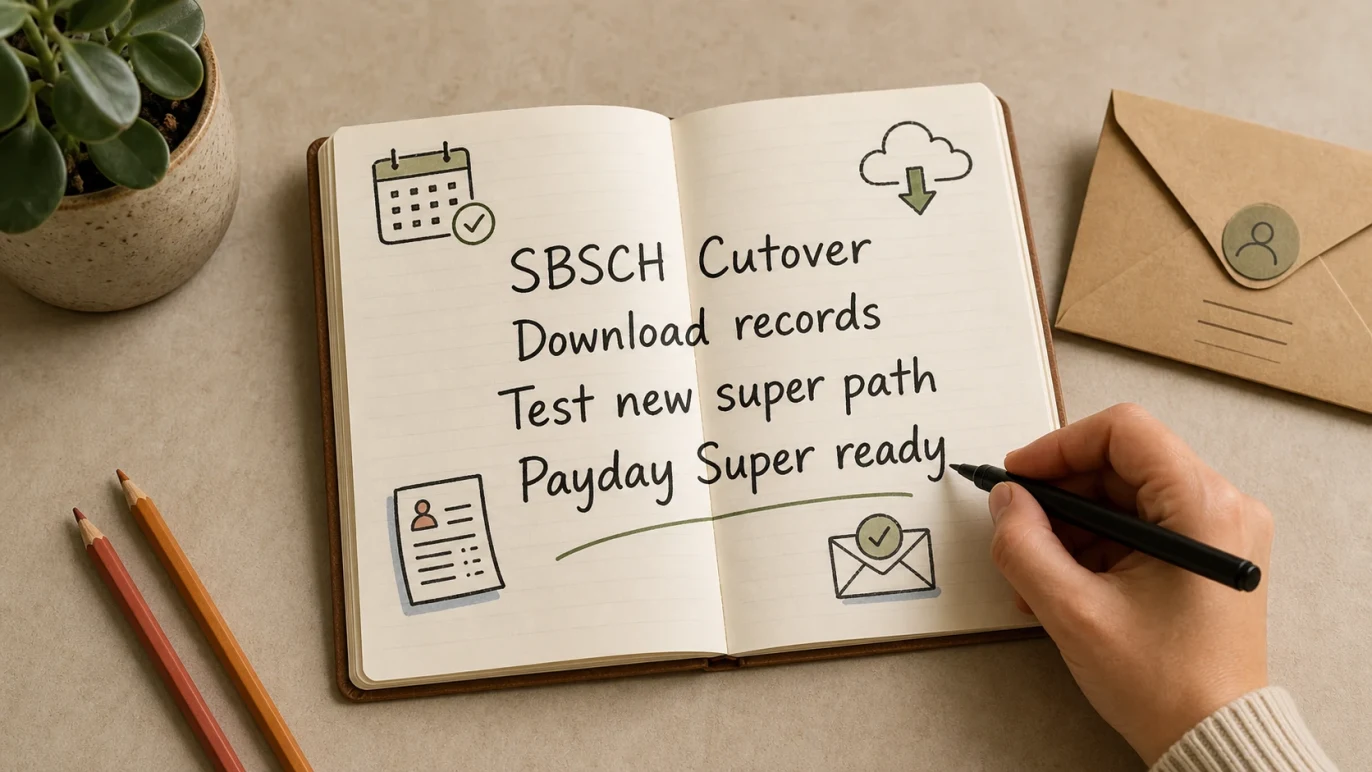
The ATO’s Small Business Superannuation Clearing House (SBSCH) is closed, and Payday Super has started. Australian employers can no longer use the SBSCH to make payments or retrieve records. The practical job now is to confirm the replacement payment path works, reconcile the final June-quarter obligation and prove that each new contribution reaches the right fund on time.
For paydays from 1 July 2026, super guarantee is part of the pay-run rhythm. Payroll, Single Touch Payroll (STP), SuperStream payments, fund responses, bank transactions and accounting records should tell the same story. A payment instruction alone is not enough evidence that a contribution reached the employee’s fund.
SBSCH preparation time is over. Check the final quarterly obligation, then trace every Payday Super contribution from qualifying earnings to fund receipt.
Quick Answer
The ATO’s current Payday Super employer update confirms that the SBSCH is unavailable and that the final April-to-June quarterly contribution was due on 28 July 2026. If that obligation was not paid in full and on time, the ATO says the employer must lodge and pay a super guarantee charge (SGC) statement by 28 August 2026.
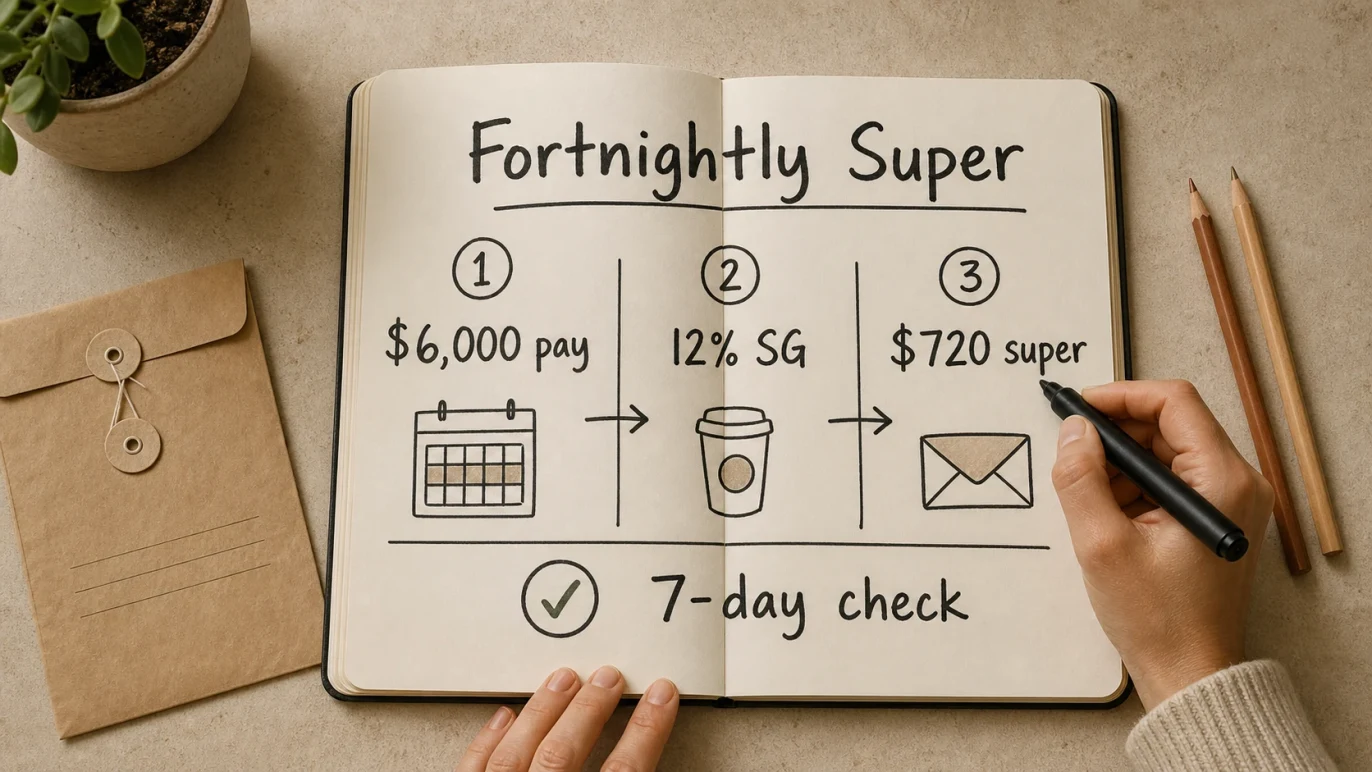
For current pay runs, the ATO’s Payday Super system guidance says contributions generally need to reach the employee’s super fund within 7 business days of payday, unless an extended timeframe applies. Employers should also check the qualifying earnings and super liability reported through STP, rather than treating payroll reporting and payment as separate jobs.
The immediate workflow is: confirm the SBSCH has been replaced, locate the records saved before closure, deal with any final-quarter shortfall, reconcile each Payday Super payment and resolve rejected or returned contributions quickly.
Key Points
- The SBSCH cannot process payments or provide record access after its 30 June 2026 cut-off.
- The final quarterly super obligation and the new Payday Super obligations need separate reconciliation.
- Contributions generally need to reach the employee’s fund within 7 business days of payday, not merely leave the employer’s bank account.
- STP qualifying earnings, the super liability, payment status and accounting entry should agree for each pay run.
- A rejected contribution is unfinished payroll work and needs an owner, evidence and a prompt correction.
What Changed After 1 July 2026?
The payment method, timing and reporting evidence changed together. Keeping the four jobs separate makes reconciliation easier.
| Area | Current Position | Check Now |
|---|---|---|
| SBSCH | The ATO clearing house is closed and cannot provide access to old records | Confirm the replacement provider and locate the archive saved before closure |
| Final quarterly obligation | April-to-June 2026 super remained under the old quarterly timing | Confirm fund receipt and take SGC action if the 28 July due date was missed |
| Payday Super | Super is calculated and paid with salary and wages and generally reaches the fund within 7 business days | Trace payment, fund receipt and any return or rejection for every pay run |
| STP and accounting | Qualifying earnings and super liability are reported each payday | Reconcile payroll reports, bank payments, fund status and ledger entries |
The goal is a complete evidence trail for each pay run, not merely a new clearing-house login.
Employer Checks After SBSCH Closure
1. Confirm The Replacement Payment Path Is Live
Record the payroll or clearing-house service now used, the bank account that funds contributions, the person who approves them and where payment and response records are stored. If an accountant or bookkeeper manages the process, agree who monitors rejections and who confirms that the fund received the contribution.
The replacement should be SuperStream compliant and should give the business enough status information to identify a failed or returned contribution before the deadline passes.
2. Reconcile The Final June-Quarter Obligation
Do not assume a July bank payment settled the April-to-June quarter correctly. Compare qualifying workers, ordinary time earnings under the former quarterly rules, the amount sent and the amount received by each fund.
If the full contribution did not reach the correct fund by the quarterly due date, deal with the SGC requirement promptly. The calculation can depend on salary and wages, timing and late payments, so use the ATO process and ask a registered tax professional when the facts are unclear.
3. Locate The SBSCH Record Archive
SBSCH records cannot now be downloaded from the closed service. Locate the transaction histories and employee details saved before closure, along with bank records, payroll reports and any copies held by your adviser.
If the archive is incomplete, document what is missing and rebuild the evidence from reliable source records. Do not recreate a clean-looking history that cannot be supported by actual payments, payroll reports and fund information.
4. Reconcile Each Payday Super Pay Run
For each pay run, compare:
- qualifying earnings and the super calculation
- the year-to-date qualifying earnings and super liability reported through STP
- the payment instruction and bank transaction
- the fund’s received, allocated, returned or rejected status
- the accounting entry and outstanding super liability
A useful control is to keep the pay run open for super follow-up until every contribution has either been received or assigned for correction.
5. Resolve Rejected Contributions Quickly
Review fund names, unique superannuation identifiers, member numbers, stapled-fund details, new starters, terminated employees and returned-payment reasons. A contribution that leaves the bank and later returns has not completed the employer’s workflow.
If you pay contractors who may be entitled to super, review that workflow separately. Gimbla’s paying super for contractors guide is a useful place to start.
6. Keep Payroll, STP And The Ledger Aligned
Use one short reconciliation record for the pay run: wages, PAYG withholding, qualifying earnings, super liability, payment date, fund status, any return and the final accounting treatment. If a correction changes STP or payroll year-to-date amounts, keep the reason and the corrected report with the original evidence.
The STP finalisation review remains useful for correcting prior-year payroll data, while current Payday Super checks belong inside each new pay cycle.
Simple example
A cafe pays staff every fortnight. In one pay run after 1 July 2026, the cafe has $6,000 of qualifying earnings. Using a 12% SG rate, the super amount for that pay run is $720.
The cafe prepares the $720 with the pay run, sends it through its replacement SuperStream process and checks that the employees’ funds receive it within the applicable timeframe. If a contribution is returned, the cafe keeps the response, corrects the employee or fund details and records the new payment rather than treating the first bank transaction as complete.
| Pay Run Item | Amount |
|---|---|
| Qualifying earnings | $6,000 |
| SG rate | 12% |
| Super to prepare for payday | $720 |
The accounting lesson is simple: super is now a regular pay-run cash-flow item. If the cafe pays fortnightly, its super reconciliation should also run fortnightly.
What To Check Before Relying On The New Process
Before you trust the replacement workflow, run one controlled review. The person responsible for payroll should be able to trace the same pay run from employee setup through to fund receipt and accounting records.
Check:
- employee super fund and member details are current
- pay items used for super calculations are mapped correctly
- Qualifying Earnings are understood for the pay categories you use
- super amounts agree with the approved pay run
- the payment method is SuperStream compliant
- returned or rejected contributions have a clear owner and deadline
- payroll reports, bank payments and accounting entries can be reconciled
- the SBSCH record archive is located and stored securely
If any step depends on one person’s memory, document it before the next pay run.
How Gimbla Fits The Workflow
In Gimbla, the useful shift is to keep payroll, super preparation, STP and accounting records close together. That way, the business can review wages, PAYG withholding, qualifying earnings, super and bank payments as connected records rather than separate end-of-quarter admin.
Start with the broader payroll for small business in Australia guide if the whole workflow needs review. Then use the Payday Super Ready page to review the new payment rhythm, the Single Touch Payroll page for STP setup, and the SuperStream glossary if you need the payment standard explained plainly.
If you are repairing an incomplete transition, the Australian financial year guide can help you put the final quarterly records beside BAS, payroll, reports and adviser review.
Common Mistakes
Assuming SBSCH Records Are Still Available
The access deadline has passed. Work from records saved before closure, payroll reports, bank evidence, fund responses and adviser copies. Record any evidence gap instead of assuming the old portal can fill it later.
Treating A Bank Payment As Fund Receipt
A contribution may be delayed, rejected or returned after money leaves the employer’s account. Keep monitoring the status until the fund has received the contribution or the error has been assigned and corrected.
Treating Super As Separate From Cash Flow
Payday Super brings super into the wage-payment rhythm. That affects cash planning immediately for weekly and fortnightly employers that previously relied on quarterly batches.
Mixing The Final Quarter With New Pay Runs
The April-to-June obligation and contributions for paydays from 1 July follow different timing rules. Reconcile each period explicitly so a payment intended for one obligation is not assumed to have settled another.
Ignoring Returned Contributions
A returned contribution is not a completed payment. Keep the rejection reason, correction, replacement payment and final fund status together so the business can show what happened.
Frequently Asked Questions
Can Employers Still Access The SBSCH?
No. The Small Business Superannuation Clearing House closed after 11:59 pm AEST on 30 June 2026. It can no longer process payments or provide access to records.
What If The June 2026 Quarter Super Payment Was Late?
The final quarterly payment was due on 28 July 2026. If an employer missed that date, the ATO says they must lodge and pay an SGC statement by 28 August 2026. The calculation can be fact-specific, so check the ATO process or use a registered tax professional.
How Quickly Must Payday Super Reach An Employee’s Fund?
For paydays from 1 July 2026, super contributions generally need to be received by the employee’s fund within 7 business days, unless an extended timeframe applies.
What Should Employers Check After Each Payday Super Pay Run?
Check qualifying earnings, the super liability reported through STP, the payment instruction, fund receipt or return status, bank payment and accounting entry.
The Bottom Line
The SBSCH transition is now a reconciliation job. Confirm the replacement payment path, locate the old record archive, settle any final-quarter issue and trace every new super contribution through to the employee’s fund.
The useful question is no longer “are we ready for 1 July?” It is: for the latest pay run, can we show how super was calculated, reported, paid, received and recorded?