Small Business
Small businesses play a pivotal role in driving economic growth and fostering community development. Often characterized by their entrepreneurial spirit and local roots, small businesses contribute significantly to job creation, innovation, and the overall vibrancy of economies. These enterprises, ranging from family-owned shops to innovative startups, form the backbone of many communities, providing goods and services that meet the unique needs of local residents. Small businesses also tend to be more agile and responsive to market changes, fostering adaptability and resilience. Additionally, they create a sense of community identity, as customers frequently develop personal relationships with owners and employees. Despite facing challenges, such as limited resources and competition, the impact of small businesses on the economic landscape cannot be overstated, emphasizing the importance of supporting their growth and sustainability.

Getting an ABN Number: A Practical Guide for Small Businesses
Learn when you need an ABN, how to apply through the ABR, and what to set up next for invoices, GST, PAYG and records.

How To Calculate Gross Operating Income
Learn how to calculate gross operating income, when the property formula applies, and how it differs from gross profit and operating income.
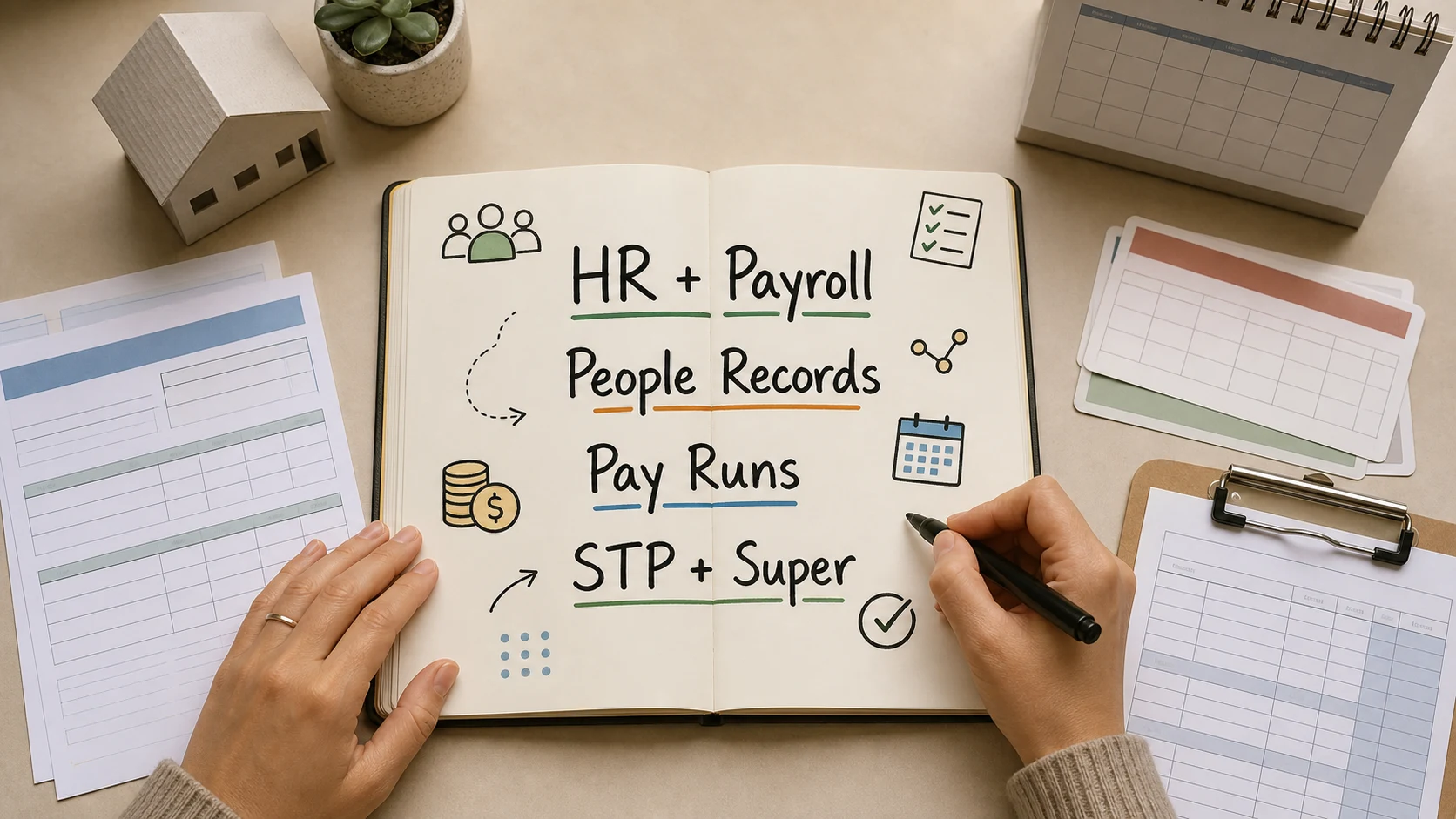
HR and Payroll Software for Small Business
Learn why HR and payroll software matters for Australian small businesses, from employee records and rosters to STP, PAYG, super and cleaner books.

Is Payroll Processing Easy to Learn With Software?
Find out how payroll software makes pay runs easier to learn, what Australian employers still need to check, and when to ask for expert help.

MYOB Essentials Accounting vs Xero: Which Is Better for Australian Small Businesses?
Compare MYOB Essentials Accounting and Xero for Australian small businesses, including pricing, payroll, BAS, bank feeds and when to switch.

Do You Need Payroll Software for One Employee?
Wondering if one employee means payroll software? Learn the Australian STP, PAYG, super and payslip rules for tiny employers, and when software helps.

Payroll Only Software for Small Business in Australia
Compare payroll-only software for Australian small businesses, including STP, payslips, super, timesheets and when connected accounting matters.