- Overview
- Quick answer
- Key points
- Who might have a WPN
- What Changed in July 2026
- Why the extension matters
- If You Keep STP Through an Agent
- If You Use the STP Exemption
- Simple example
- Payslips are still required
- How Gimbla can help WPN employers
- What WPN Employers Should Check Now
- Common mistakes
- Frequently asked questions
- In short
WPN Holders and STP: Agent Lodgment or Payment Summaries
Published June 12th, 2026 | Updated August 2nd, 2026 | Team Gimbla
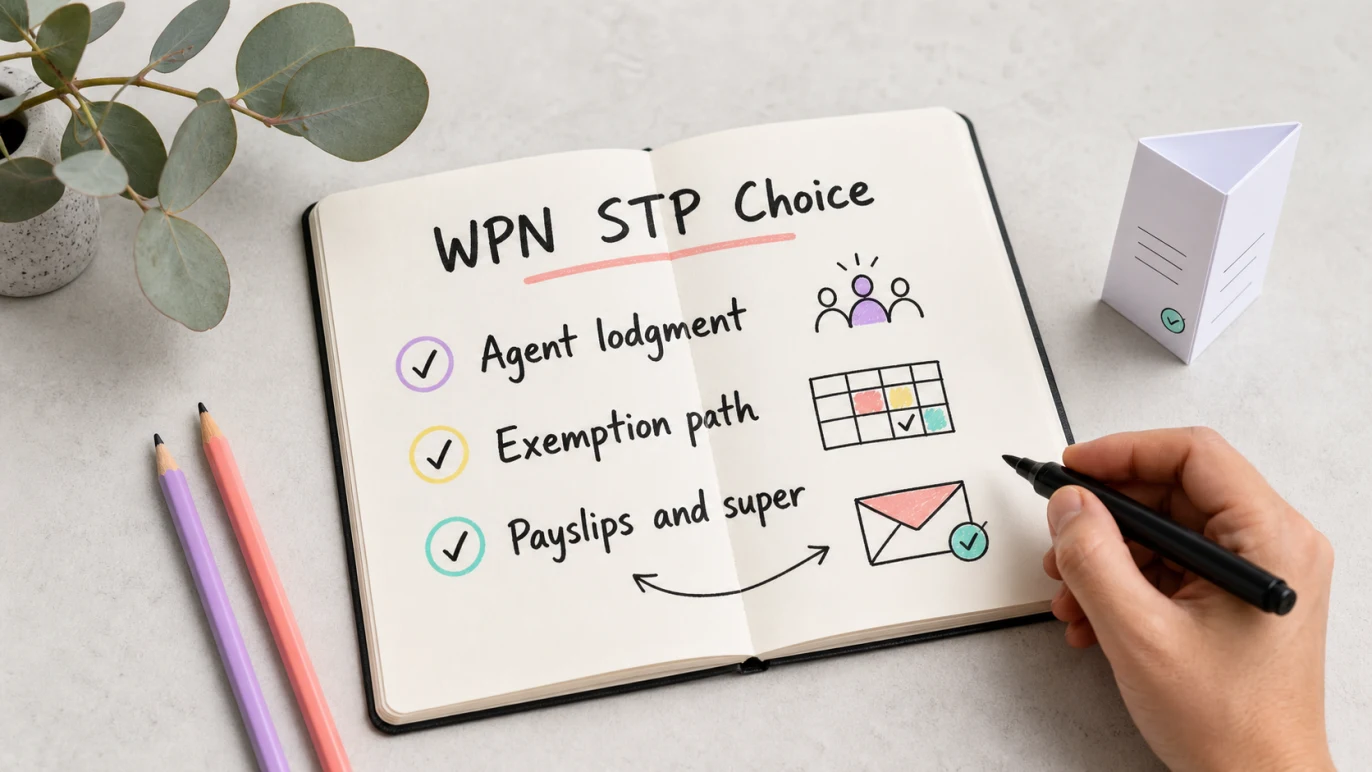
Withholding payer number (WPN) employers have a specific Single Touch Payroll (STP) rule in force. The ATO says WPN employers are exempt from STP reporting until 30 June 2033, but since 1 July 2026 any employer in that group that chooses STP must lodge through an authorised representative, such as a registered tax agent or BAS agent.
For household employers, including some self-managed NDIS participants who directly employ support workers, the practical choice is narrower than it first looks: use an authorised agent for STP, or use the exemption and PAYG payment summaries while keeping payroll, payslip, PAYG withholding and super records clean.
A WPN employer can still use payroll software for pay runs, payslips and super. The July change affects the STP lodgment path, not the underlying payroll work.
Quick answer
The ATO’s WPN and STP guidance, published on 15 October 2025, says:
- WPN employers that choose STP can now only lodge through an authorised representative, such as a registered tax agent or BAS agent
- the current WPN exemption from STP reporting still applies
- a WPN employer that stops STP reporting still needs to meet PAYG withholding obligations through payment summaries and the PAYG payment summary annual report
- some WPN holders are household employers: the ATO’s household employee guidance includes support workers directly employed by NDIS participants, and says a WPN can be issued instead of an ABN when the payer only employs household employees for domestic services.
The ATO gives the reason for the change as ongoing work to improve and strengthen authentication and authorisation processes. In plain English: the ATO is tightening who can lodge STP for WPN holders.
Key points
- A WPN can apply to household-employee arrangements, including support workers directly employed by NDIS participants; it is not an NDIS number.
- The current STP exemption still applies for WPN employers.
- Choosing STP now means lodging through an authorised representative.
- If you stop STP reporting, you still need PAYG withholding payment summaries and annual reporting.
- Gimbla Payroll can still help create payslips, keep payroll records and prepare super payments; the Beam-powered clearing-house workflow accepts WPN as the business identifier type for super payments.
Who might have a WPN
A WPN is a withholding payer number, not an NDIS identifier. In the payroll context, it is used when a payer has PAYG withholding obligations but does not need an ABN for that role.
The ATO’s household employee guidance says householders may need to withhold tax from payments to employees who provide domestic services. It lists nannies, carers, cleaners, gardeners, housekeepers and support workers directly employed by participants in the National Disability Insurance Scheme (NDIS). If those workers are employees, the householder must register for PAYG withholding before paying them. If they are only employing household employees for domestic services, the ATO says they do not need an ABN and will be issued a WPN.
For NDIS, the important word is directly. A self-managed participant, nominee or representative may be the employer if they directly employ a support worker. If support is bought from an NDIS provider, agency, platform or independent contractor, the payroll treatment can be different. Check the employee-or-contractor position before assuming a WPN is needed.
What Changed in July 2026
For most employers, STP is the normal payroll reporting channel. The ATO’s STP overview says STP reports salary and wages, PAYG withholding and superannuation liability information each time employees are paid through STP-enabled software.
WPN holders sit inside an exemption. The new rule does not remove that exemption. Instead, it changes the lodgment path for WPN holders that decide to use STP anyway.
If you need the broader payroll reporting background first, start with Gimbla’s guide to what Single Touch Payroll software is, then return to the WPN-specific exemption and agent-lodgment rule.
| WPN employer choice | What applies now | What still needs attention |
|---|---|---|
| Keep reporting through STP | The July rule requires lodgment through an authorised representative. | Give the agent clean payroll records, pay-run checks, payslips and super details. |
| Already using an authorised representative | The ATO says no change is needed if the representative already reports STP for you. | Confirm the agent’s process and check that July pay events were accepted. |
| Stop STP reporting | Move to PAYG withholding payment summaries while the WPN exemption applies. | Issue summaries, lodge the annual report and explain the change to employees. |
Why the extension matters
The extension matters because these employers often have unusual registration or payroll setups. The ATO’s household-employee guidance is a good example: an individual who only employs household employees for domestic services may be issued a WPN rather than needing an ABN. That can include support workers directly employed by NDIS participants.
That gives affected employers time, but the July agent rule means they should not assume a direct STP setup can continue unchanged. If you are still trying to lodge without an authorised representative, the ATO says you can either engage one to report STP on your behalf or stop STP reporting and move to payment summaries.
If You Keep STP Through an Agent
If you are keeping STP reporting, confirm the arrangement with a registered tax agent or BAS agent now. They need enough payroll information to lodge accurately, and you should agree who is responsible for each step.
Useful questions to ask:
- Will the agent lodge every pay event, or only an agreed reporting cycle if a concession applies?
- Which payroll reports, payslips and employee records do they need from you?
- Who checks corrections, termination payments and year-end finalisation?
- How will employees know whether their income statement or payment summary is the source of truth?
Gimbla keeps the payroll side of that handover organised: employee setup, pay runs, payslips, PAYG withholding records, super details and payroll reports. The authorised representative still handles the WPN STP lodgment path.
If You Use the STP Exemption
Stopping STP reporting does not mean stopping payroll compliance. The ATO says WPN employers that stop STP still need to give PAYG withholding payment summaries to employees and lodge a PAYG payment summary annual report at the end of each financial year.
The broader ATO STP exemptions page also says an employer that is exempt from STP must continue its PAYG withholding obligations, including reporting and paying PAYG withholding and super guarantee liabilities, giving payment summaries to employees and giving the ATO a payment summary annual report.
If you reported STP for the full 2025-26 financial year and then stopped, the ATO said to finalise the 30 June reporting by 14 July 2026, then use payment summaries for later payments. If that finalisation is still outstanding, ask your registered tax agent or BAS agent how to complete it and correct any affected employee income information.
If you moved from STP to payment summaries part-way through 2025-26, the ATO recommends zeroing out STP reporting and finalising, informing employees of the change, then providing payment summaries and lodging the annual report for the full financial year. If you could not zero out STP, employees may see part of the year in an income statement and part in a payment summary.
The ATO’s PAYG payment summary statement page says the annual report is generally due by 14 August and that employers do not need to lodge a payment summary annual report for amounts reported and finalised through STP.
Simple example
A self-managed NDIS participant directly employs one support worker for regular in-home support. The worker has been assessed as an employee, the participant has registered for PAYG withholding before making payments, and the ATO has issued a WPN because the participant only employs household/support workers for domestic services rather than running an ABN business.
The participant uses Gimbla to run fortnightly pay runs, create payslips, track PAYG withholding and prepare super payments through the clearing-house workflow.
Now that the July rule applies, they confirm which of two practical paths they have taken. If they keep STP, they give their registered BAS agent the payroll records needed to lodge on their behalf and check that each report is accepted. If they use the WPN exemption, they complete the transition from STP and prepare PAYG payment summaries.
In both paths, payroll still has to be done properly. Employees still need payslips, PAYG withholding records still need to be kept, and super still needs to be paid.
If the participant pays an NDIS provider, agency or independent contractor instead of directly employing the worker, this example may not apply. The worker classification and payment arrangement need to be checked first.
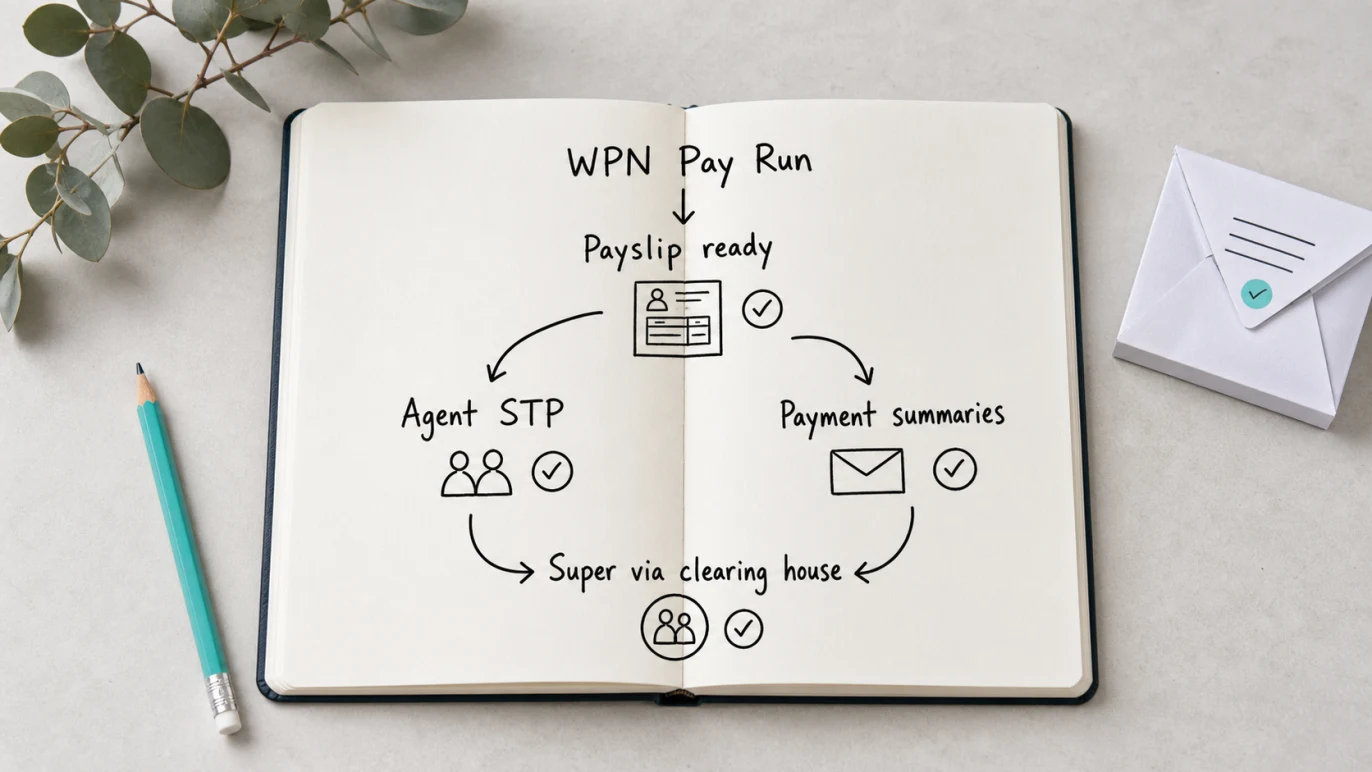
Payslips are still required
STP does not replace payslips. The Fair Work Ombudsman’s record-keeping and pay slips fact sheet says employers covered by relevant Commonwealth workplace laws must issue pay slips to each employee and keep accurate employee records, generally for seven years.
That is where payroll software still matters even when STP is not mandatory for a WPN holder. You need a repeatable pay-run workflow, readable payslips and records that can support an employee question, an adviser review or an ATO process later.
How Gimbla can help WPN employers
Gimbla Payroll can help WPN employers keep the payroll work tidy even when STP lodgment goes through an agent or the employer uses payment summaries.
The super path is not the same as the STP path. Gimbla’s Beam-powered clearing-house workflow accepts WPN as the business identifier type for super payments, so a self-managed NDIS employer can use Gimbla to prepare super contribution details and submit them through the clearing-house workflow. STP lodgment remains separate and needs the authorised-representative path if the employer keeps reporting.
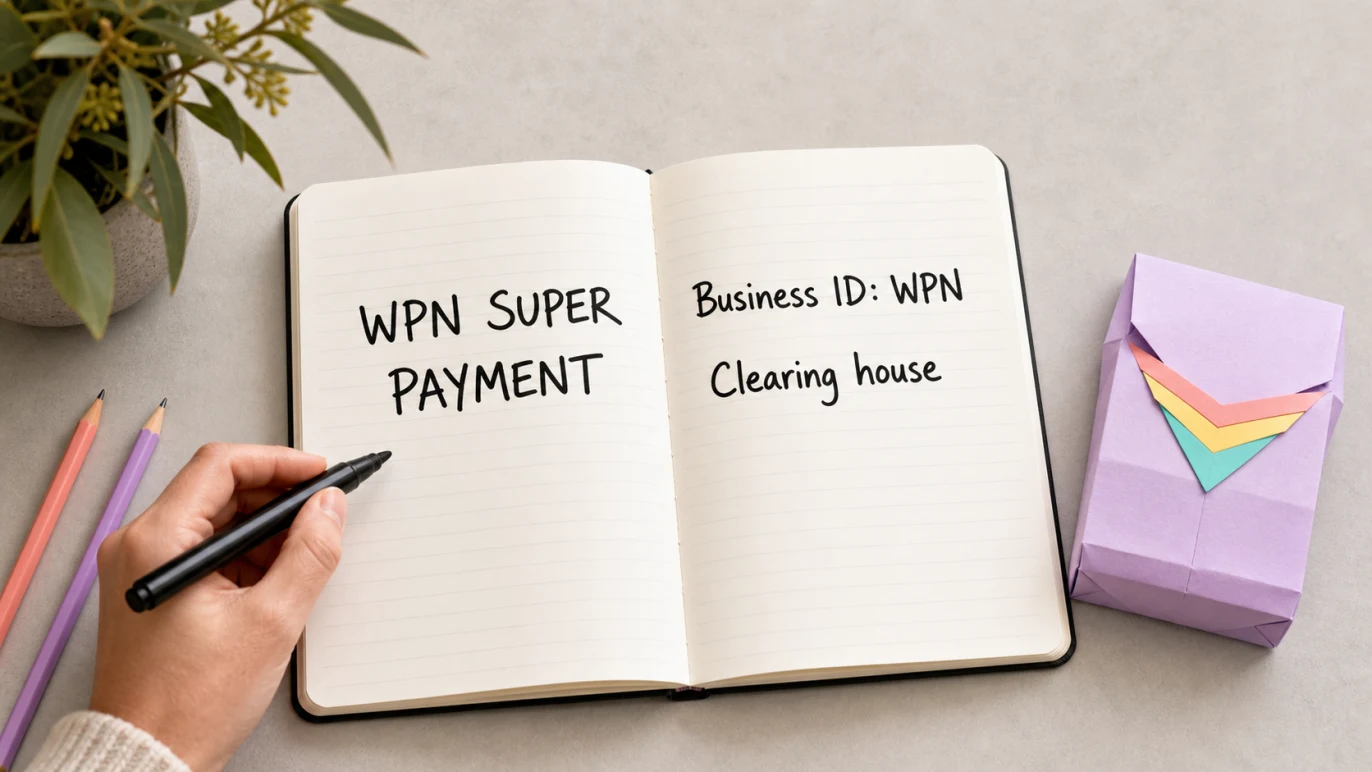
In Gimbla, you can:
- set up employees and payroll details with the create an employee guide
- run pay runs and create payslips for employees
- keep PAYG withholding, super and payroll reports closer to the accounts
- use the Single Touch Payroll workflow where it is appropriate for your setup
- prepare super contribution details and use Gimbla’s Beam-powered clearing-house workflow to submit super and receive the BPAY reference for payment
- keep the broader super workflow aligned with SuperStream, Superannuation Guarantee and the superannuation clearing house process.
For a self-managed NDIS employer, that means the payslip and super work can stay organised while the adviser handles the reporting decision. The boundary is simple: Gimbla can support the payroll records, payslips and super payment workflow, but it does not replace the authorised representative when the employer chooses STP.
What WPN Employers Should Check Now
WPN employers should:
- Confirm whether the payer is directly employing workers, including any household or NDIS support workers, or paying a provider, agency or contractor.
- Confirm whether the employer uses a WPN and is covered by the WPN STP exemption.
- Confirm whether the employer is using STP through an authorised representative or relying on the exemption and payment summaries.
- If keeping STP, confirm who lodges each pay event and check the accepted or rejected status of reports sent since the change.
- If STP stopped, confirm finalisation, employee communication and the payment-summary process are complete or scheduled.
- Check that payslips, PAYG withholding, employee records and payroll reports are complete.
- Review super fund details and clearing-house payment steps before the next contribution cycle.
- Ask your adviser to resolve any missed transition step, direct lodgment attempt or inconsistency in employee income information.
Common mistakes
Assuming the exemption means no payroll records
The WPN exemption is about STP reporting. It does not remove pay, payslip, PAYG withholding, super or record-keeping obligations.
Trying to lodge WPN STP directly after the rule changed
If you choose STP now, the ATO says lodgment needs to go through an authorised representative.
Mixing STP and payment summaries without explaining it
If employees have part of the year reported through STP and part through payment summaries, they may see income information at different times. Tell employees what changed and when to wait for final information.
Leaving super separate from the pay run
Super is still part of the payroll record. Keep contribution details, clearing-house references and payroll reports close enough that they can be checked together.
Frequently asked questions
Do WPN holders have to report through STP before 2033?
No. The current ATO exemption remains in place. If a WPN employer chooses to report through STP, they now need to lodge through an authorised representative.
Do NDIS participants have a WPN?
Not automatically. The ATO’s household employee guidance includes support workers directly employed by NDIS participants, and says a householder who only employs household employees for domestic services does not need an ABN and will be issued a WPN. If an NDIS participant pays a provider, agency or contractor instead, the setup may be different.
Can Gimbla lodge STP directly for a WPN holder now?
Gimbla supports payroll records, pay runs, payslips, PAYG withholding and super workflows. WPN STP lodgment now needs to go through an authorised representative such as a registered tax agent or BAS agent.
Will Payday Super have the same WPN issue as STP?
Not in the same way. STP is the reporting path with the WPN authorised-representative rule. Super payments move through the clearing-house and SuperStream workflow, and Gimbla’s Beam-powered clearing-house workflow accepts WPN as the business identifier type for super payments. That means a WPN employer can use Gimbla for pay runs, payslips and super preparation while keeping the STP decision separate.
What happens if a WPN employer stops STP reporting?
The employer still needs to meet PAYG withholding obligations. That can include giving payment summaries to employees and lodging the PAYG payment summary annual report.
Can a WPN employer still use payroll software?
Yes. Payroll software can still help calculate pay, create payslips, keep records, prepare reports and manage super payment workflows even if STP lodgment is handled by an authorised representative or the employer uses payment summaries.
In short
WPN holders can still rely on the current STP exemption. Employers that keep reporting need an authorised representative to lodge. That can include household employers such as self-managed NDIS participants who directly employ support workers. Payroll software still has an important job: clean pay runs, payslips, PAYG withholding records, WPN-compatible super payment preparation and a tidy record trail for your adviser.