- Overview
- Quick answer
- Key points
- Who should pay attention
- What to check when the payment arrives
- 2026 bookkeeping control points
- Rebate, income, tax credit and cash flow are not the same thing
- Simple example
- What if a previous T2 return included the rebate as taxable?
- How to record the rebate in accounting software
- Questions to ask your accountant
- Frequently asked questions
- Conclusion
Canada Carbon Rebate for Small Businesses: Bookkeeping Steps for 2026
Published May 23rd, 2026 | Updated June 11th, 2026 | Team Gimbla
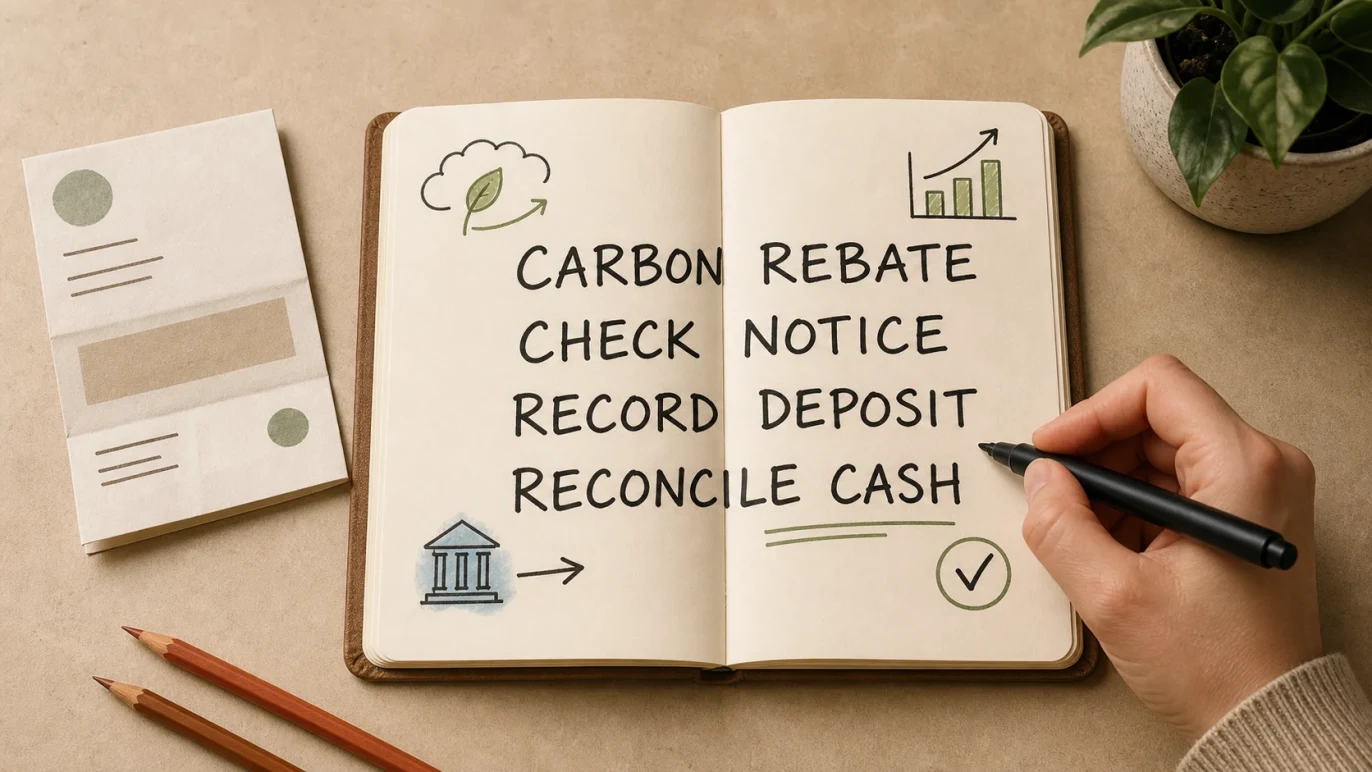
The Canada Carbon Rebate for Small Businesses is a 2026 bookkeeping and tax-review item for eligible Canadian-controlled private corporations, not just a payment to notice in the bank feed. The current Canada Revenue Agency (CRA) position is that legislation passed on 26 March 2026 makes the rebate non-taxable for all fuel charge years.
For a small business, the practical next step is to keep the CRA notice, record the deposit separately, reconcile the bank transaction, and ask the accountant or tax adviser whether any past T2 return needs review.
Treat the rebate like a source-backed government payment: keep the notice, separate it from sales, reconcile the cash, and confirm the tax treatment before year end.
Quick answer
The CRA’s Canada Carbon Rebate for Small Businesses guidance says the rebate is a refundable tax credit announced in Budget 2024. It returns part of the federal fuel charge proceeds collected from 2019-2020 to 2024-2025 to eligible Canadian-controlled private corporations, often called CCPCs.
You do not need to apply. The CRA says it calculates and automatically issues the rebate to eligible CCPCs. If you receive it, the CRA sends a notice. The 2024-2025 fuel charge year is the final payment year because the federal fuel charge was removed from 15 March 2025.
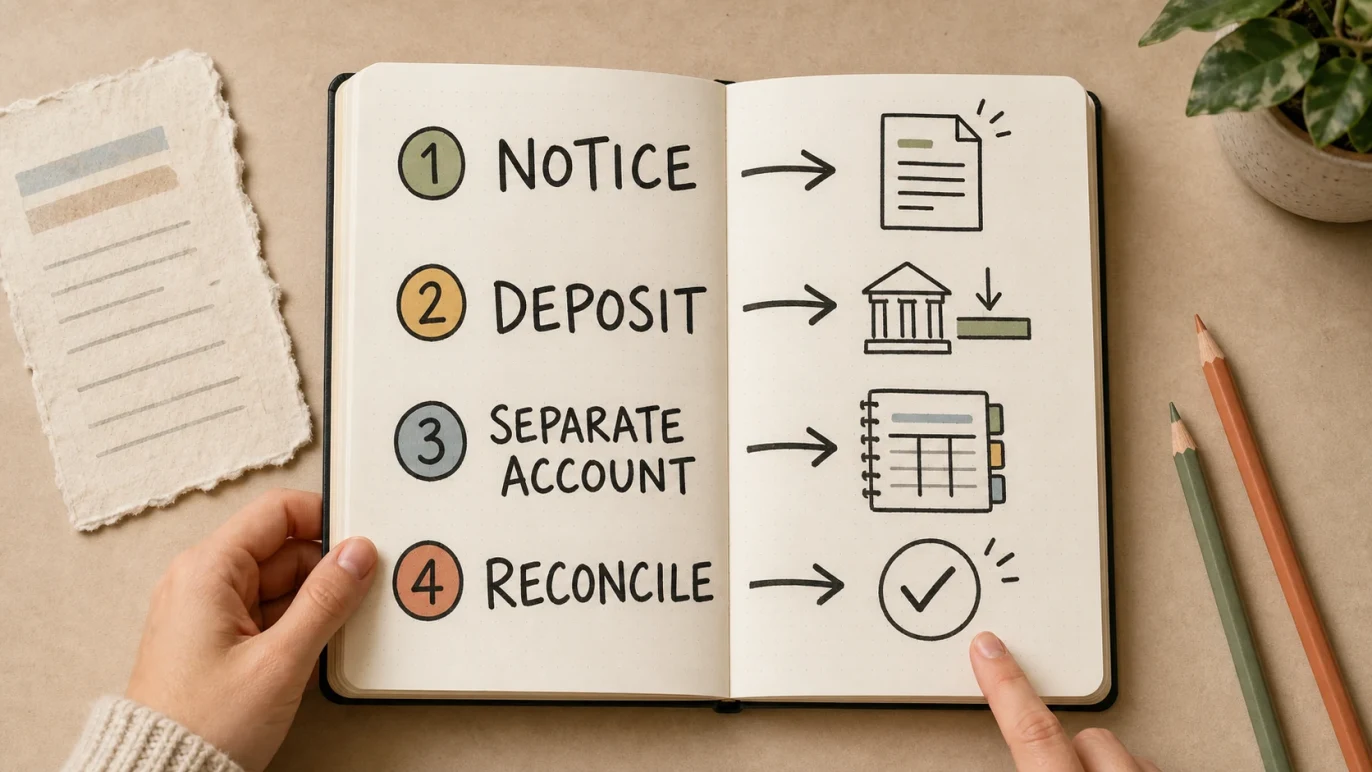
If you are searching for the Canada Carbon Rebate in 2026, the key accounting point is traceability. The payment should not disappear into ordinary sales, GST/HST, or miscellaneous income without review. It should be traceable from CRA notice to bank deposit to accounting record to tax working paper.
Key points
- The rebate is Canada-specific and applies to eligible CCPCs, not every business structure.
- Legislation passed on 26 March 2026 makes the rebate non-taxable for all fuel charge years.
- The CRA calculates and pays eligible businesses automatically, so the business should focus on records and reconciliation.
- Payment amounts depend on employee counts, designated provinces and fuel charge years.
- If a prior T2 return treated the rebate as taxable, review the CRA’s adjustment guidance with your accountant.
Who should pay attention
This article is written for Canadian small companies, bookkeepers and accountants reviewing a Canada Carbon Rebate payment or expected payment in 2026.
The CRA says only CCPCs, including Indigenous CCPCs, are eligible. For the retroactive 2019-2020 to 2023-2024 fuel charge years, the corporation generally needed to be a CCPC at all times for the 2023 tax year, file its 2023 return by 31 December 2024, and not have a final return on dissolution. For each fuel charge year, it also needed one or more employees in a designated province and 499 or fewer employees throughout Canada.
For the final 2024-2025 fuel charge year, the CRA lists similar conditions for the 2024 tax year, including a 15 July 2025 filing date for the 2024 return.
Do not rely on the article alone to decide eligibility. Use the CRA’s current page and your corporation’s own filing, employee and province facts.
What to check when the payment arrives
Use the CRA notice as the starting record, then check each accounting step.
| Check | Why it matters | What to keep |
|---|---|---|
| Eligibility facts | The rebate is limited to qualifying CCPCs and designated province employee counts | CRA notice, T2 filing dates, employee count support |
| Payment amount | Amounts depend on employee counts, province and year | CRA notice, estimator printout or adviser working paper |
| Bank deposit | The receipt needs to match the notice and bank feed | Bank transaction, deposit date, payment description |
| Tax treatment | The rebate is non-taxable under the 2026 legislation | Accountant note, tax working paper, T2 adjustment support if needed |
| GST/HST treatment | It should not be treated like customer sales revenue | Account coding note and reconciliation review |
If the payment is applied against an existing CRA debt rather than deposited into the bank, keep the CRA statement that shows how the amount was offset. The bookkeeping still needs a clear record of what happened.
2026 bookkeeping control points
Because the rebate can affect cash, reports and tax working papers in different ways, review it before finalising 2026 accounts.
- Confirm the CRA notice, payment date and bank amount agree.
- Check whether the amount was deposited into the bank account or offset against another CRA balance.
- Keep the receipt out of GST/HST sales and ordinary customer revenue.
- Decide with the accountant whether the management accounts need a separate rebate or government-payment line.
- Review any T2 return or adjustment question if the rebate was previously treated as taxable income.
That control list keeps the rebate useful for cash-flow review without making recurring trading income look stronger than it really was.
Rebate, income, tax credit and cash flow are not the same thing
A rebate can improve cash flow without being a customer sale. That distinction matters in the books.
Cash flow is the bank movement. If the CRA deposits the payment, the cash balance increases.
Accounting classification is how the receipt is recorded in the ledger. Many businesses will want a separate rebate or government payment account so the item is easy to review later.
Tax treatment is how the item affects taxable income. The CRA’s tax treatment page says the rebate is non-taxable for all fuel charge years.
Do not code the payment as a taxable customer invoice, GST/HST sale, or normal operating revenue just because it landed in the bank account. If your reports need to show it as other income for accounting purposes, make sure the tax working paper still explains the non-taxable treatment.
Simple example
Imagine an Ontario design studio receives a CRA notice and then a Canada Carbon Rebate deposit. The owner sees money in the bank account and wants to know whether to treat it like ordinary revenue.
The bookkeeper should:
- Save the CRA notice with the period’s tax records.
- Match the bank deposit to the notice during bank reconciliation.
- Record the receipt to a separate rebate or government-payment account.
- Add a note that the CRA says the rebate is non-taxable for all fuel charge years.
- Ask the accountant to review whether the corporation’s T2 records or prior reporting need any adjustment.
The key point is not the account name. It is the audit trail: notice, deposit, coding, reconciliation and tax-review note all need to tell the same story.
If the same business also employs staff, keep rebate records separate from payroll source deductions. The guide to Canada payroll deduction changes before the July 2026 pay run explains how to keep gross pay, deductions, net pay and CRA remittances in their own trail.
What if a previous T2 return included the rebate as taxable?
The 2026 non-taxable treatment created a clean-up question for some corporations.
The CRA says it is reviewing T2 Corporation Income Tax Returns for businesses that may have included the rebate in taxable income. If a corporation filed before the 30 June 2025 government announcement and there is a clear indication the amount was reported at line 295 of Schedule 1, the CRA says it will complete an adjustment and no action is required from the business.
If a corporation filed after 30 June 2025 and included the rebate in taxable income, the CRA says the corporation needs to submit an adjustment request.
That is a tax-return question, not just a bookkeeping question. Keep the records tidy, then ask the accountant or tax adviser what, if anything, needs to be changed.
How to record the rebate in accounting software
In accounting software, the workflow should be simple but deliberate:
- Create or choose a clear account for the rebate, such as a government rebate or non-taxable rebate account, based on accountant advice.
- Attach or file the CRA notice outside the bank feed so the source document is not lost.
- Match the bank deposit during reconciliation rather than leaving it uncategorised.
- Do not create a customer invoice unless your adviser has a specific reason.
- Do not add GST/HST to the receipt.
- Add a note for the year-end tax review.
- Check the cash flow statement and management reports so the one-off receipt is not mistaken for recurring trading income.
Gimbla’s Canada accounting software page is written for Canadian small businesses that need invoices, expenses, GST/HST-friendly records, bank reconciliation and reports. If a rebate, refund or tax credit appears in the bank account, the same habit applies: keep the source record and reconcile the cash movement clearly.
Questions to ask your accountant
Before finalising the year’s accounts, ask:
- Are we definitely a CCPC for the relevant year?
- Which employee counts and provinces supported the CRA calculation?
- Did any payment offset an existing CRA debt instead of arriving as cash?
- How should the receipt appear in management reports?
- Does any prior T2 return need adjustment because the rebate is non-taxable?
- What records should we keep with the tax file?
For a growing company, these questions matter because one-off rebates can distort trend reports. Cash improved, but that does not mean sales improved. Keep the explanation visible for directors, owners and advisers.
Frequently asked questions
Is the Canada Carbon Rebate for Small Businesses taxable?
The CRA says legislation passed on 26 March 2026 makes the Canada Carbon Rebate for Small Businesses non-taxable for all fuel charge years. Keep the CRA notice and ask your tax adviser how to show the treatment in the corporation’s tax working papers.
Do eligible businesses need to apply for the rebate?
No. The CRA says it calculates and automatically issues the payment to eligible CCPCs. If the corporation receives the rebate, the CRA sends a notice.
How should a business record the rebate?
Record the bank receipt separately from ordinary sales, keep the CRA notice, avoid GST/HST treatment, reconcile the deposit, and ask your accountant which account and tax working paper treatment to use.
What should I check if the payment amount looks wrong?
Check CCPC eligibility, designated province employee counts, filing dates, whether the corporation had more than 499 employees, whether CRA applied the payment to a debt, and whether the return is still being assessed or validated.
Conclusion
The Canada Carbon Rebate for Small Businesses is a useful cash-flow event, but it should not be treated casually. The safest workflow is to save the CRA notice, record the payment separately, reconcile the bank deposit, keep it out of GST/HST sales, and confirm the non-taxable treatment with the tax file.
That gives the owner, bookkeeper and accountant one clear trail from the CRA notice to the final accounts.