How Much More Do You Need to Sell on Black Friday?
Published | Team Gimbla
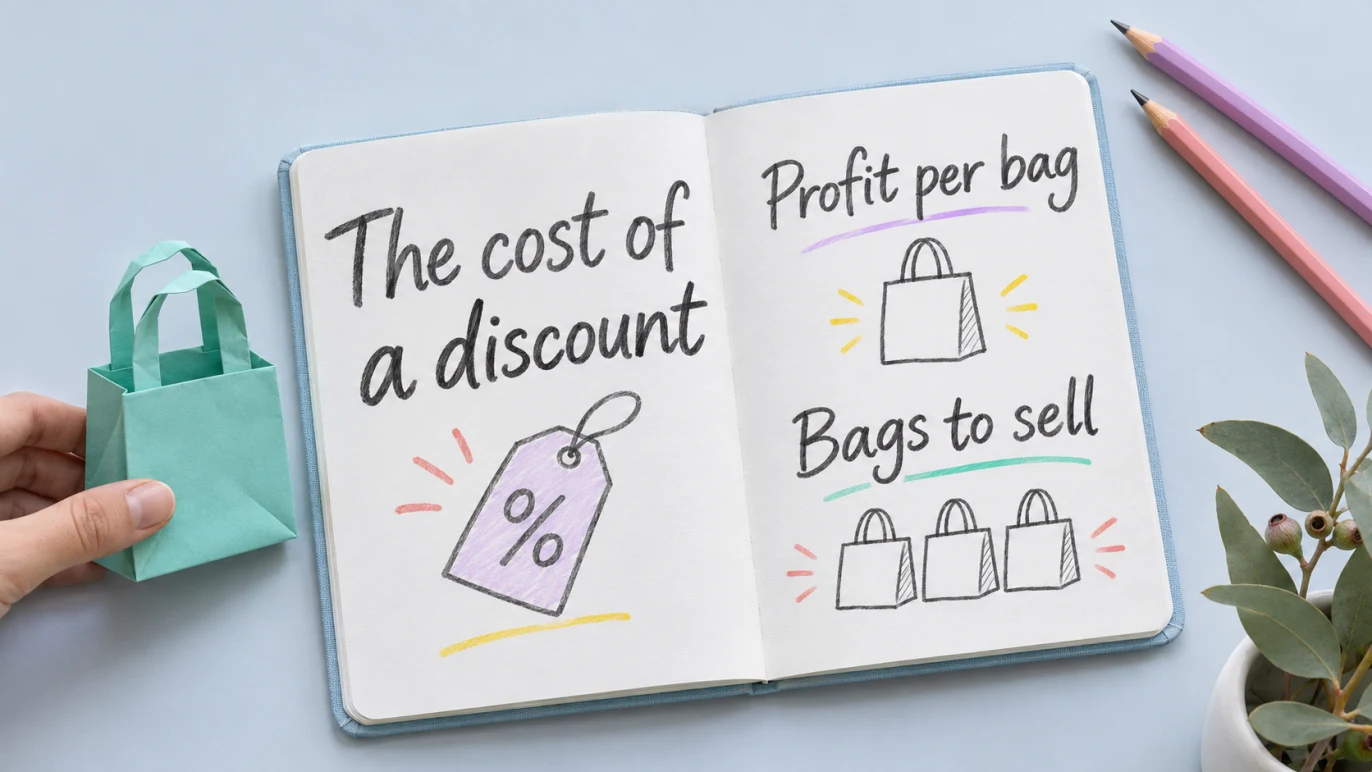
A shop that usually earns $20 on a $50 canvas tote gives up half its gross profit per bag when it offers 20% off. The supplier still charges $30. To earn the same gross profit over the weekend, the shop has to sell twice as many bags.
With Black Friday falling on 27 November 2026, Australian retailers have time to test a price against the stock on the shelf. Start with one product you expect to feature and the number you would ordinarily sell over the same days. Australian Government retail sales calendar.
Quick answer
To find your gross profit margin after a discount, subtract the cost of one unit from its sale price. Divide the result by the sale price and multiply by 100. For a GST-registered shop, use sales figures excluding GST and costs excluding any GST you can claim back.
To find how many units you need to sell, divide the gross profit dollars you would usually earn over the period by the new gross profit per unit. Round up to a whole unit. This works while each sale still earns a positive gross profit.
Simple example
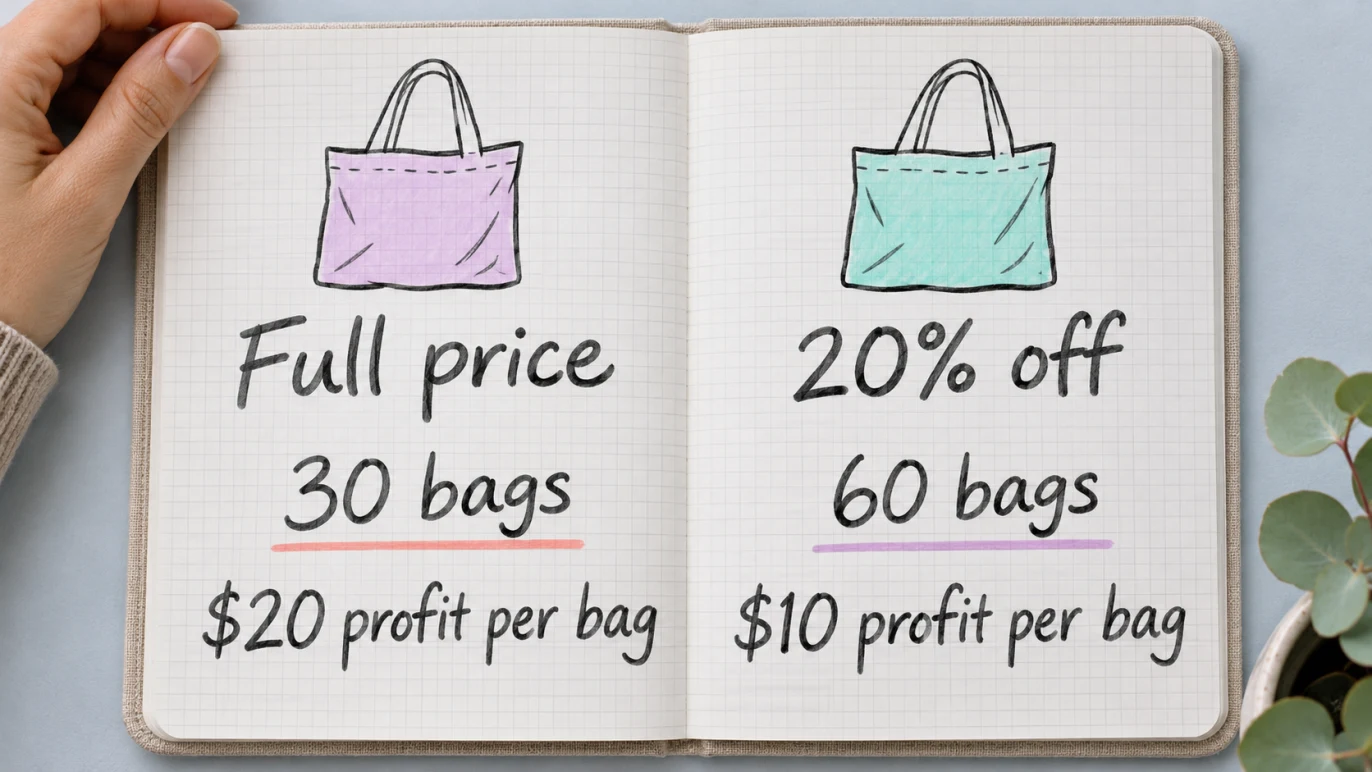
A homewares shop usually sells 30 canvas totes over a comparable weekend. At full price it earns 30 × ($50 − $30) = $600 in gross profit. All figures exclude GST. For this first comparison, the purchase cost per tote stays fixed and the shop incurs no extra selling costs.
At 20% off, a tote sells for $40 and earns $10. Its gross profit margin falls from 40% to 25% ($10 ÷ $40). To reach the usual $600, the owner needs to sell 60 totes. If there are only 45 on the shelf and no more can arrive, the offer cannot reach that target.
What would a smaller discount do?
Try 10% off in the chart. At $45 the shop keeps $15 per bag, so it needs 40 sales. That leaves five of the 45 bags on the shelf as a buffer. The owner can now judge whether ten extra sales over a typical weekend sounds realistic.
Allow for the costs of running the offer
Gross profit leaves rent, advertising and other overheads to pay. If the shop spends $150 on an ad specifically for the 20% offer, selling 60 totes earns the usual gross profit but leaves the owner $150 behind after advertising. To recover that spend as well, the target rises to ($600 + $150) ÷ $10 = 75 totes.
Free delivery changes a different part of the calculation. Suppose the shop pays $5 postage on each discounted one-bag order and usually sells those bags in store. At the $40 sale price, the contribution margin is just $5 per order after the bag and postage. Count postage per order if customers can buy several bags in one parcel.
If clearing a shelf is the goal, decide how many gross profit dollars you are willing to give up for the space. That gives the sale a target you can actually measure.
Keep the price history behind the offer
Keep dated till or invoice records for the advertised item, including when customers last bought it at the comparison price. Save the offer as customers will see it, with the products included and the end date. On 10 November 2026, the ACCC flagged misleading reference prices, exclusions from advertised storewide sales and offers that continue after a countdown ends. ACCC Black Friday announcement.
Compare the result with your books
After the weekend, pull the quantity sold, discounts and returns for the featured item from your till. Use the supplier cost for the units sold, including any change in the cost of replacement stock. A whole shipment invoiced that week may cover several weeks of sales. How cost of goods sold works.
Use the Profit and Loss report in Gimbla to check how the weekend’s sales, cost of sales and advertising affected the wider business. Keep the item-level calculation alongside it so a profitable sale on another line cannot hide a shortfall on the totes. If November falls short of plan, the budget vs actual guide shows how to trace the difference to price, volume or costs.
Frequently asked questions
What is the difference between a discount and a margin?
A discount measures the price cut as a percentage of the original selling price. Gross margin measures the gross profit as a percentage of the price the customer actually pays, excluding GST. The two percentages use different starting figures.
Can sales revenue rise while gross profit falls?
Yes. In the tote example, selling 45 bags at $40 brings in $1,800 and earns $450 in gross profit. Selling 30 at full price brings in only $1,500 but earns $600. The discounted weekend takes in more money and leaves less to cover overheads.