How to Count Annual Leave During a Christmas Shutdown
Published | Team Gimbla
A Sydney office that closes for two weeks over Christmas 2026 might deduct just seven days of annual leave from a full-time employee. Three of the ten weekdays are NSW public holidays. A colleague who works Tuesday to Thursday could use six days of leave over the same break, because all three holidays fall outside their roster.
For an Australian employer, the first job is to check whether you can direct staff to take leave. Then work through the closure dates against each person’s ordinary hours. That gives you both the notice to send and the hours to enter in payroll.
Quick answer
If an award or enterprise agreement covers an employee, you can direct them to take annual leave for a Christmas shutdown only if it allows the direction and the direction is reasonable. If neither applies, you can require paid annual leave where that requirement is reasonable. Fair Work’s end-of-year guidance.
For an employee taking accrued paid annual leave, mark the days they would ordinarily have worked. Pay their ordinary hours on applicable public holidays at their base rate and keep those hours out of the leave deduction. The remaining rostered hours are the annual leave to book. Fair Work’s public holiday pay rules.
When to give Christmas shutdown notice
Take a private office whose clerical staff are covered by the Clerks—Private Sector Award 2020. Clause 32.5 requires 28 days’ written notice of the closure, unless the employer and a majority of the relevant employees agree to a shorter period. For a shutdown starting Monday 21 December 2026, that puts the usual notice date at Monday 23 November. Other awards may set a different period. Clerks Award, clauses 32.4 and 32.5.
Tell affected staff when the office will close and reopen. If you are directing an employee to take accrued paid leave under this award, give the direction in writing and identify the days it covers. A customer announcement about holiday opening hours gives payroll no record of what you told the employee.
Simple example
A Sydney office closes from Monday 21 December 2026 and reopens on Monday 4 January 2027. Alex normally works 7.6 hours each weekday, has enough accrued annual leave and takes the whole closure off.
Alex uses leave on 21–24 December and 29–31 December. Christmas Day, Monday 28 December (the additional Boxing Day holiday) and New Year’s Day are paid public holidays on Alex’s roster. Boxing Day itself falls on Saturday, when Alex ordinarily works zero hours. NSW public holiday calendar.
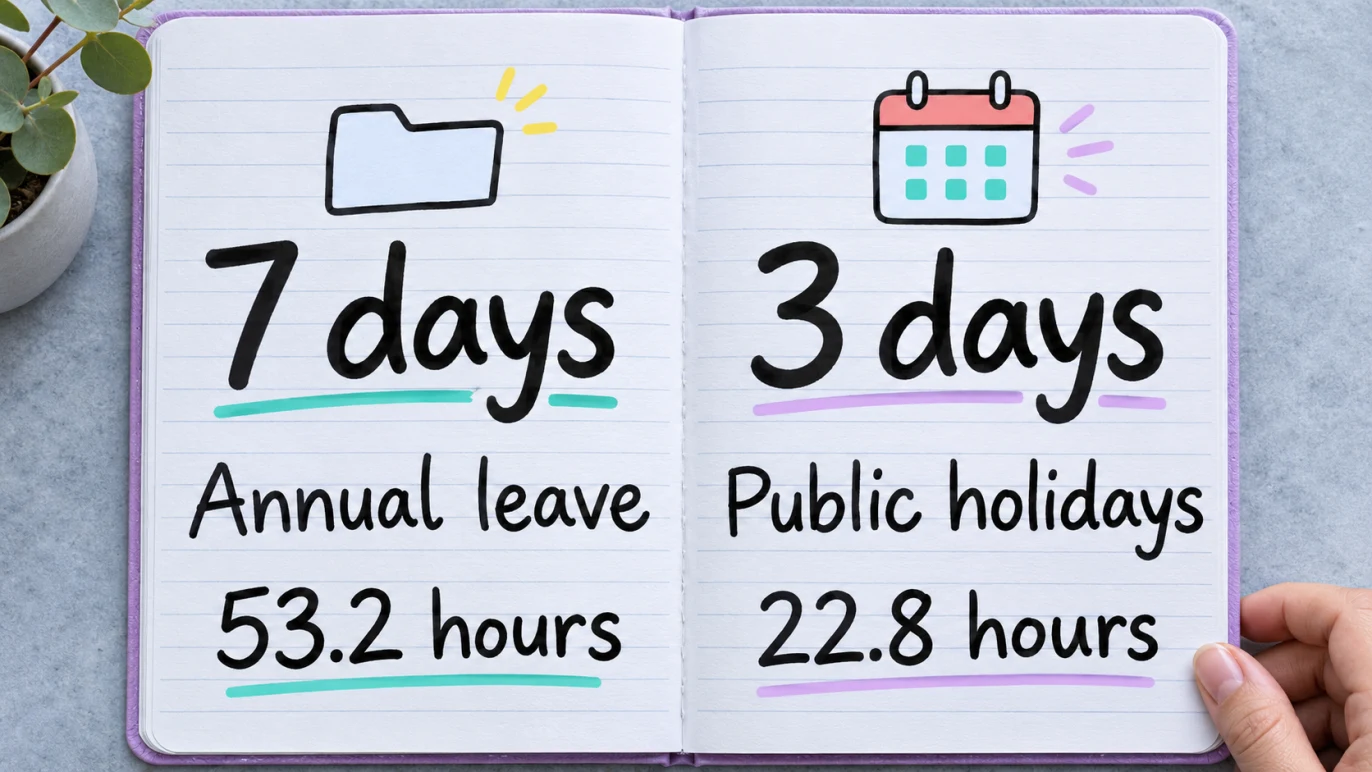
The fortnight’s 76 ordinary hours split into 53.2 hours of annual leave (7 × 7.6) and 22.8 public holiday hours (3 × 7.6). Charging both weeks to annual leave would use 22.8 hours too much.
How the same closure changes with the roster
Two employees can each work three days a week and still need different amounts of leave. Compare Monday to Wednesday with Tuesday to Thursday below. Both employees normally work 45.6 hours over the fortnight, but only the first would ordinarily work on Monday 28 December.
What if the leave balance runs short?
Suppose Alex will have only 38 hours available for the shutdown. That covers five of the seven leave days. There are 15.2 hours still to arrange. Under the Clerks Award, the employee and employer can agree in writing to leave without pay for that time, or sign an agreement for annual leave in advance under clause 32.4. With no agreed arrangement, ordinary wages may still be payable for the uncovered hours. Resolve that with the employee before finalising payroll.
Before the office closes, Alex should know how those two days will appear on the payslip.
If unpaid leave is agreed, review any public holidays within that period separately. Entitlement can depend on the employee’s ordinary hours, the award or agreement and the circumstances of the arrangement. Get workplace advice if the entitlement is unclear.
What to enter in the Gimbla pay run
- Start with the roster. Use the employee’s usual workdays and hours for each pay period. A copy of the staff roster makes it easier to explain why two colleagues have different deductions.
- Enter the leave hours. For Alex, enter 30.4 hours for the first week and 22.8 for the second. Include approved leave when creating or refreshing the draft pay run. Check the ordinary earnings already on the draft so each hour is paid once.
- Review pay and balance separately. Check any annual leave loading due on the leave hours. In Alex’s fortnight, the leave taken should total 53.2 hours. The closing balance also reflects any new leave accrued. Keep the notice, roster and any signed agreement with the payroll records.
Frequently asked questions
What if someone starts work after we give shutdown notice?
Under the Clerks Award, give an affected new employee written notice as soon as reasonably practicable after you hire them. Check how much leave they will have by the closure and discuss any shortfall with them.
Does a part-time employee get paid for a public holiday on their day off?
Generally, an employee who would have worked no ordinary hours that day receives no public holiday payment for it. Their annual leave balance also stays the same. Check their usual working pattern and any extra entitlement under their award or agreement.