Demystifying the Chart of Accounts: A Beginner's Guide
Published March 20th, 2026 | Team Gimbla
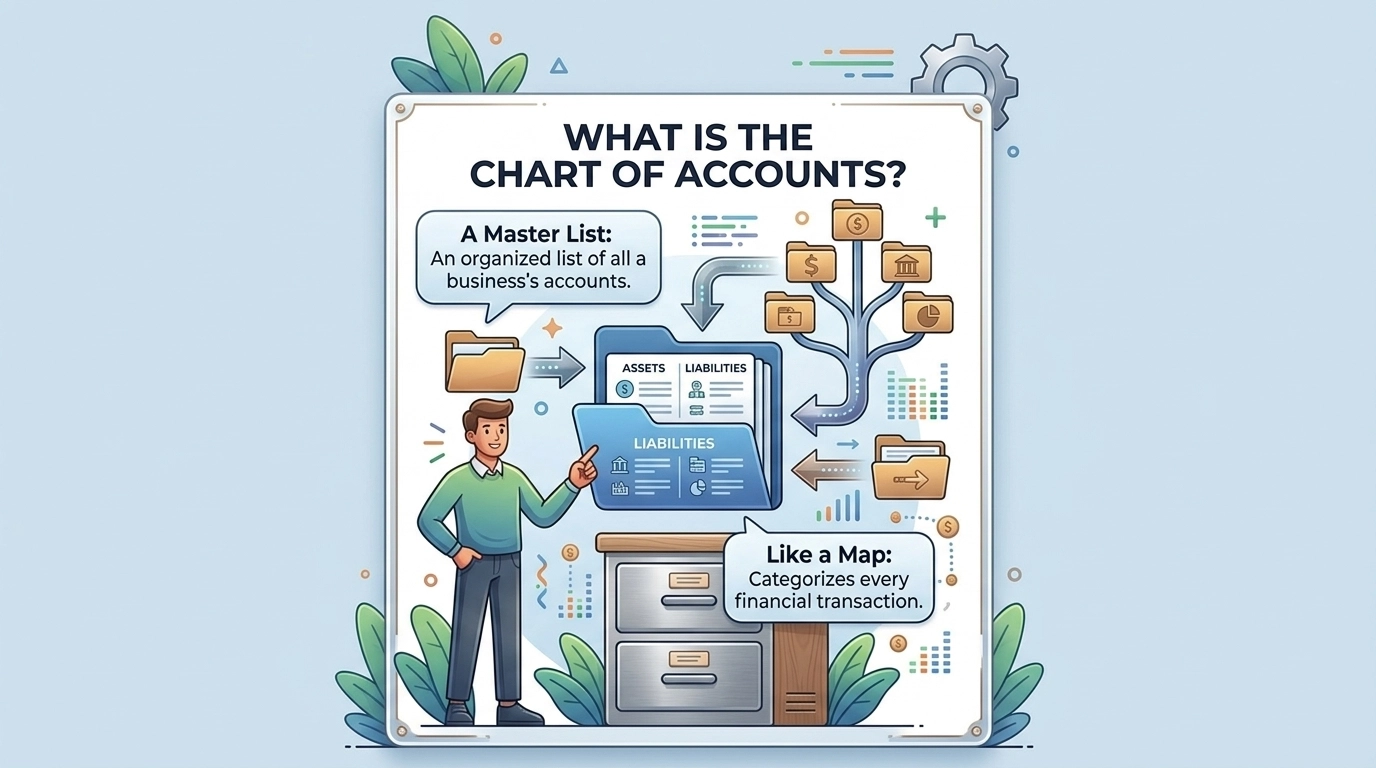
Starting a new business is an exciting journey, but the moment you open your bookkeeping software for the first time, you might be greeted by a daunting list of accounting jargon. At the very center of this financial maze is the Chart of Accounts (COA). If you aren’t an accountant, this term might sound intimidating, but it is actually one of the most logical and essential tools for your business’s financial health. If you are setting up a file from scratch, our add a new business guide shows where those defaults begin in Gimbla.
Think of the Chart of Accounts as the ultimate filing cabinet or a master map for your business. Every time money moves in or out of your company, the COA tells you exactly which “folder” that transaction belongs in. Managing this map manually can be a headache, which is where intuitive accounting software like Gimbla steps in to automate and simplify the process for small business owners.
Gimbla stands out as a free and user-friendly accounting software that comes with a pre-built, easy-to-understand Chart of Accounts tailored for your specific business needs.
1. The Core Building Blocks of the COA
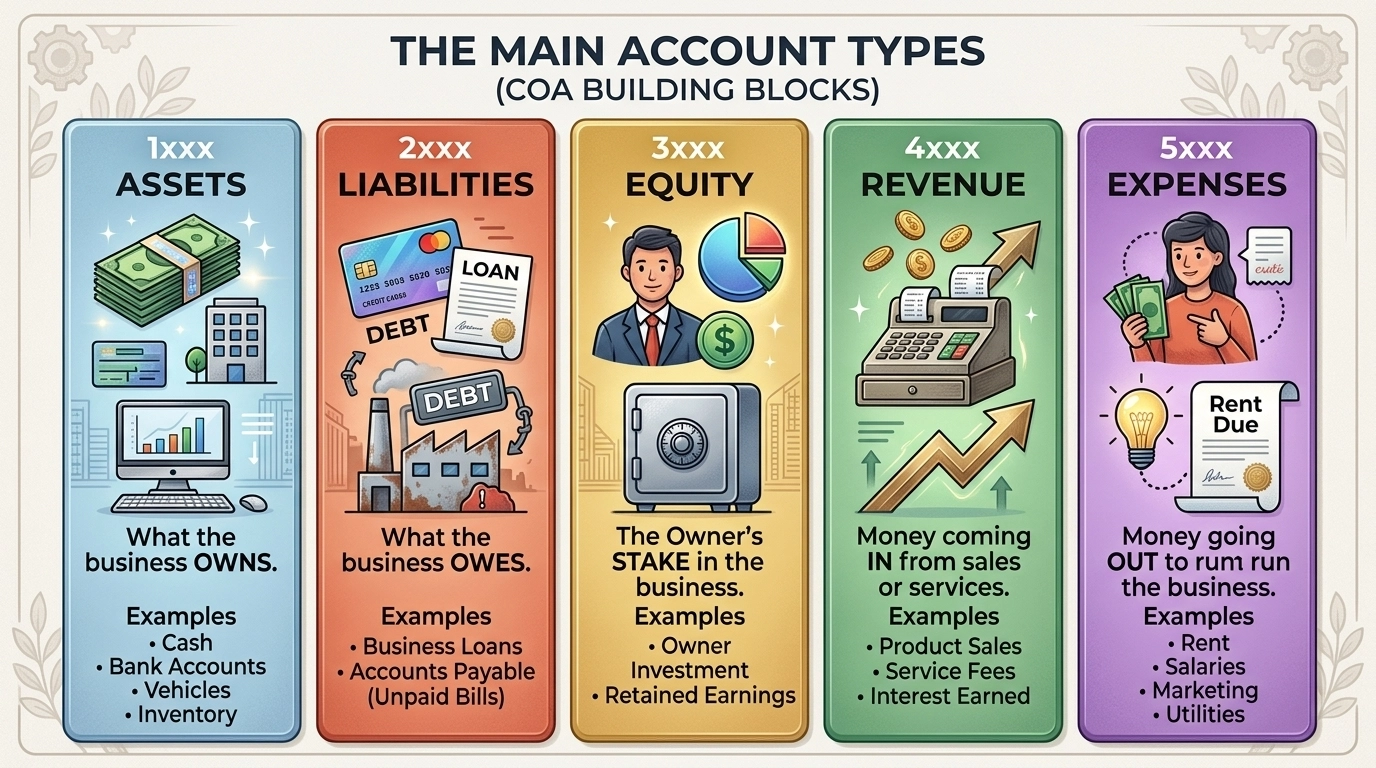
To make sense of the Chart of Accounts, you just need to understand its five main categories. Accountants traditionally use a numbering system to keep these organized:
- Assets (1xxx) - What you OWN: Everything of value your business holds. Examples include cash in your bank accounts, inventory, company vehicles, and computers.
- Liabilities (2xxx) - What you OWE: Any debts or financial obligations your business has to pay. This includes business loans, credit card balances, and unpaid bills (Accounts Payable).
- Equity (3xxx) - Your STAKE: This represents the owner’s true value in the business after debts are paid. It includes initial owner investments and accumulated profits (Retained Earnings), and connects directly to ratios like the equity ratio.
- Revenue (4xxx) - Money IN: The income your business generates from its primary operations, such as product sales or service fees.
- Expenses (5xxx) - Money OUT: The everyday costs required to run your business. Common examples include rent, employee salaries, marketing, and utilities.
2. Why a Well-Organized Chart of Accounts Matters

For non-accountants, it’s easy to wonder why you need to be so specific about where every dollar goes. Here is why a clean COA is critical:
- Accurate Financial Reporting: Your daily transactions flow directly from the COA into your most important financial reports. Assets, Liabilities, and Equity form your Balance Sheet, while Revenue and Expenses create your Income Statement (Profit & Loss). The trial balance guide shows how those ledger balances are checked before reports are trusted.
- Painless Tax Seasons: When your expenses are neatly categorized as they happen, handing your books over to an accountant at tax time is a breeze. It ensures you claim the right deductions and stay compliant.
- Better Business Decisions: By categorizing income and expenses, you can clearly see which products are most profitable and where you might be overspending.
Conclusion
You don’t need a degree in finance to understand the Chart of Accounts; you just need to know the basic building blocks and how they flow together to tell the story of your business. Accounting software like Gimbla empowers business owners to manage their finances intuitively behind the scenes. By relying on a well-structured Chart of Accounts, you can ditch the financial confusion, gain valuable insights into your cash flow, and focus your energy on growing your business.