ABN vs ACN: What Is the Difference?
Published June 7th, 2026 | Team Gimbla
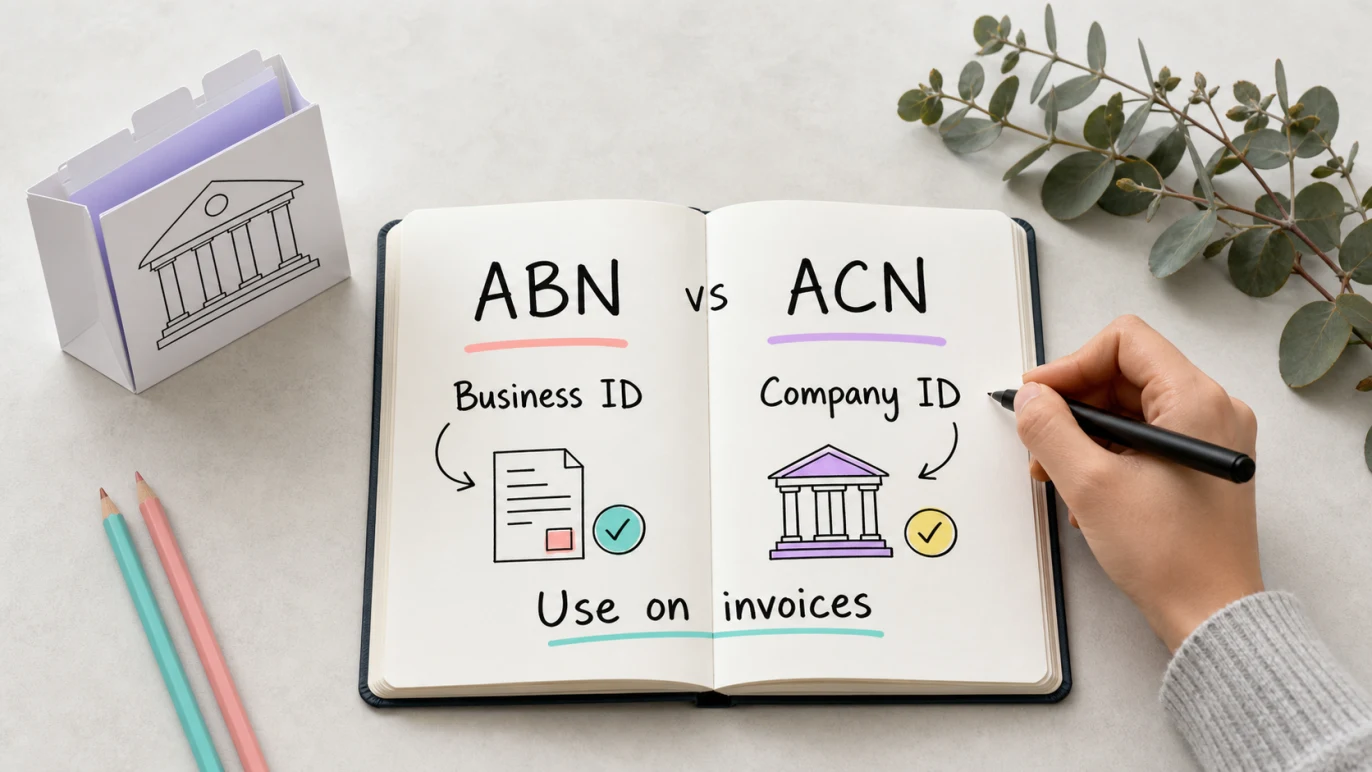
An ABN and ACN are both Australian business identifiers, but they are not the same thing. An Australian Business Number (ABN) identifies a business or other enterprise for tax and business dealings. An Australian Company Number (ACN) identifies a registered company. A sole trader can have an ABN and no ACN. A company receives an ACN from ASIC and usually also uses an ABN for invoices, GST and everyday business records.
For small-business bookkeeping, the practical question is simple: what is your legal structure, and which number needs to appear on invoices, supplier forms, bank records, tax settings and company documents?
Use the ABN to identify the business for tax and trading. Use the ACN to identify the company as a registered legal entity.
Quick answer
An ABN is an 11-digit number that identifies a business to government, other businesses and the public. Business.gov.au explains that an ABN identifies your business, does not replace a tax file number, and can be used for ordering, invoicing, GST credits and other business dealings.
An ACN is a 9-digit number for registered companies. ASIC says an ACN is issued when a company is registered. ASIC also explains that most companies have both an ABN and ACN, and that a company’s ABN is often the ACN with two extra digits at the beginning.
That means:
- a sole trader usually has an ABN, not an ACN
- a partnership or trust may have an ABN, not an ACN unless a company is involved
- a company has an ACN and usually also applies for an ABN
- a company may be able to display its ABN where an ACN would usually be required if the ABN includes the ACN
Key points
- An ABN is for businesses and other enterprises; an ACN is only for companies.
- Companies get an ACN first, then usually apply for an ABN for tax and business use.
- An ABN does not make a sole trader into a company or give limited liability.
- The number on an invoice should match the legal entity issuing the invoice.
- If the structure changes from sole trader to company, records, tax registrations and bank details may need review.
ABN and ACN compared
| Question | ABN | ACN |
|---|---|---|
| Full name | Australian Business Number | Australian Company Number |
| Length | 11 digits | 9 digits |
| Who issues it? | Australian Business Register, managed by the ATO | ASIC |
| Who can have one? | Sole traders, companies, partnerships, trusts, charities and other eligible entities | Registered companies |
| Main use | Tax, GST, invoices, supplier checks and business dealings | Company identification on ASIC and company documents |
| Bookkeeping impact | Appears in business details, invoices, bills, GST setup and supplier records | Confirms the company entity behind company records and documents |
Why the difference matters
The difference matters because the numbers point to different legal ideas.
An ABN says the entity is registered for Australian business dealings. It does not say the entity is a company. A sole trader with an ABN is still personally responsible for the business.
An ACN says a company exists on ASIC’s register. A company is a separate legal entity from its shareholders and directors. The company may trade under a business name, but the ACN identifies the company itself.
This affects practical records:
- customer invoices
- supplier onboarding forms
- GST and BAS setup
- payroll and PAYG settings
- business bank accounts
- contracts and quote templates
- ASIC company documents
- accountant year-end workpapers
If the wrong identifier is used, customers, suppliers or advisers may not know which entity issued the document or should be paid.
ABN is not the same as a business name
An ABN identifies the entity. A business name is the trading name used with customers. A company, sole trader or partnership can register a business name, but the business name is not a separate legal entity by itself.
For example, a sole trader named Priya Shah might register the business name “Northside Studio”. The ABN belongs to Priya Shah as the sole trader entity. The trading name helps customers recognise the business, but it does not create a company or ACN.
If Priya later registers Northside Studio Pty Ltd, that company is a different legal entity. It receives an ACN and usually needs its own ABN, bank account, invoice settings and tax records.
Simple example
Two Australian businesses send invoices:
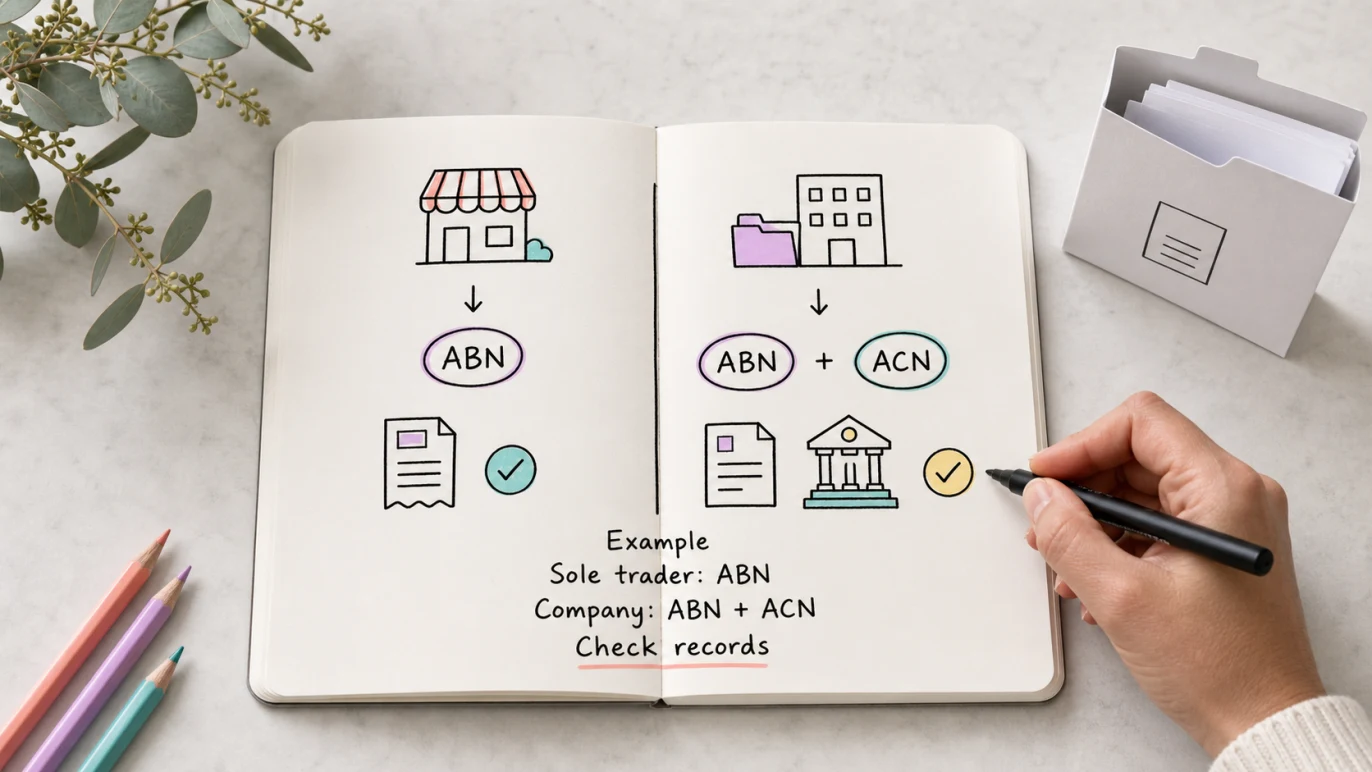
- A sole trader designer trades under a registered business name. The invoice should show the relevant business name, contact details and ABN. There is no ACN because the business is not a company.
- A Pty Ltd design company sends an invoice from the company. The company has an ACN from ASIC and usually also has an ABN. The invoice should identify the company correctly, and the company may use its ABN in place of the ACN if the ABN includes the ACN with two leading digits.
The work might look similar to the customer, but the legal entity is different. That difference affects contracts, payments, GST setup, director records and year-end reporting.
Records to check before sending invoices
Before sending invoices or setting up suppliers, check:
- the legal name of the entity issuing the invoice
- whether the business is a sole trader, company, partnership, trust or charity
- the ABN shown in the accounting software
- whether the entity is registered for GST
- whether the invoice template needs company details or an ACN
- whether the bank account belongs to the same entity
- whether supplier ABNs have been checked before payment
- whether business name, logo and contact details match the legal record
The goal is a clear trail from the invoice to the entity, tax settings, bank payment and accounting record.
Common mistakes
Assuming an ABN means limited liability
An ABN does not make a business a company. A sole trader with an ABN is still a sole trader. If limited liability, shareholders or company governance matter, the structure needs a separate company discussion.
Using an old sole trader ABN after incorporating
When a sole trader changes to a company structure, the company is a new entity. Do not keep invoicing from the old sole trader ABN unless that is genuinely the entity doing the work.
Mixing company and personal records
If a company exists, keep company income, expenses, bank payments and director transactions separate from personal records. Mixing them can make GST, payroll, director loan and tax work harder.
Treating a business name as the legal entity
A business name can sit on invoices and branding, but the legal entity behind it still matters. Check whether the entity is an individual, company, partnership or trust.
How Gimbla can help
Gimbla keeps business details, invoices, bills, bank reconciliation, GST settings and reports in one workflow. That helps owners and bookkeepers keep the legal entity details consistent across everyday records.
Useful setup checks include:
- Add the correct legal name, business name and ABN to invoice settings.
- Keep company records separate from sole trader or personal records.
- Check GST registration before charging GST.
- Use supplier records to keep ABNs, tax invoice details and payment history together.
- Reconcile payments so the entity receiving or paying money matches the accounting record.
If you are still setting up, start with the getting an ABN guide, the ABN glossary and the guide to choosing a business structure.
Frequently asked questions
What is the difference between an ABN and ACN?
An ABN is an 11-digit business identifier used by many Australian entities. An ACN is a 9-digit company identifier issued by ASIC when a company is registered.
Does a sole trader need an ACN?
No. A sole trader can have an ABN, but an ACN is only for registered companies. A sole trader who later incorporates should review the structure, registrations, bank account and invoice settings.
Does a company need both an ABN and ACN?
A company receives an ACN when ASIC registers it. Most companies also apply for an ABN so they can deal with tax registrations, invoices, GST, supplier checks and business records.
Can a company use its ABN instead of its ACN on invoices?
ASIC says a company can display its ABN where it would usually display its ACN if the ABN includes the company’s ACN with two extra digits at the beginning. Check the current ASIC guidance if you are setting up official company documents.
In short
ABN and ACN answer different questions. The ABN identifies the business or enterprise for tax and business dealings. The ACN identifies the company registered with ASIC.
For clean bookkeeping, make the invoice match the legal entity. A sole trader usually uses an ABN only. A company has an ACN and usually also uses an ABN for tax, GST, invoices and supplier records.